


Here is a recurring puzzle that blindsides hundreds of families across Dubai and Abu Dhabi every exam season: A teenager spends four solid hours in their bedroom studying. They can define every term at the dinner table and solve individual textbook questions without hesitation.
Then, they sit a full mock paper for IGCSE, GCSE, IB, or A-Level, and somewhere around the 65-minute mark, their performance visibly crumbles. The handwriting loosens, calculated answers miss final units, and multistep working is abandoned.
The instinctive reaction for both parent and student is to assume a knowledge problem: that they simply need to review the content more thoroughly. Or worse, parents dismiss it as careless laziness.
In our tutoring rooms and across our Psychology of Learning stream, we see that it is almost never a lack of intelligence. What you are witnessing is a student running out of a specific cognitive capacity: exam stamina.
Quick answers before you read
What exam stamina actually is (and why it is not a knowledge problem)
Consider the difference between a person who jogs 2 kilometres twice a week and an athlete training for a 21 kilometre half marathon. Both people know how to run. Their mechanics are identical. But if you place the recreational runner on a marathon course, they will hit a wall long before the finish line. They are not lazy or undisciplined; they simply have never conditioned their muscles to sustain output for that duration.
Exam stamina is the cognitive equivalent of marathon endurance. An official examination paper does not just test whether information exists in the brain. It tests whether that information can be retrieved, synthesised, and transcribed under strict timed conditions for 90 to 180 continuous minutes without a pause. In British curriculum and IB schools across the UAE, students face a significant shock if they have never experienced external examination halls, as explored in our guide on why exams returning challenges students who never sat external papers.
Holding continuous vigilance across 12 to 24 dense pages demands immense mental energy. If an adolescent has only ever practised in 20 minute bursts, their brain will inevitably signal mental exhaustion long before the invigilator calls time.
Exam stamina is a physical and cognitive fitness, not an intellectual fact. Knowing the complete syllabus does not automatically grant the stamina to write it out for two hours straight.
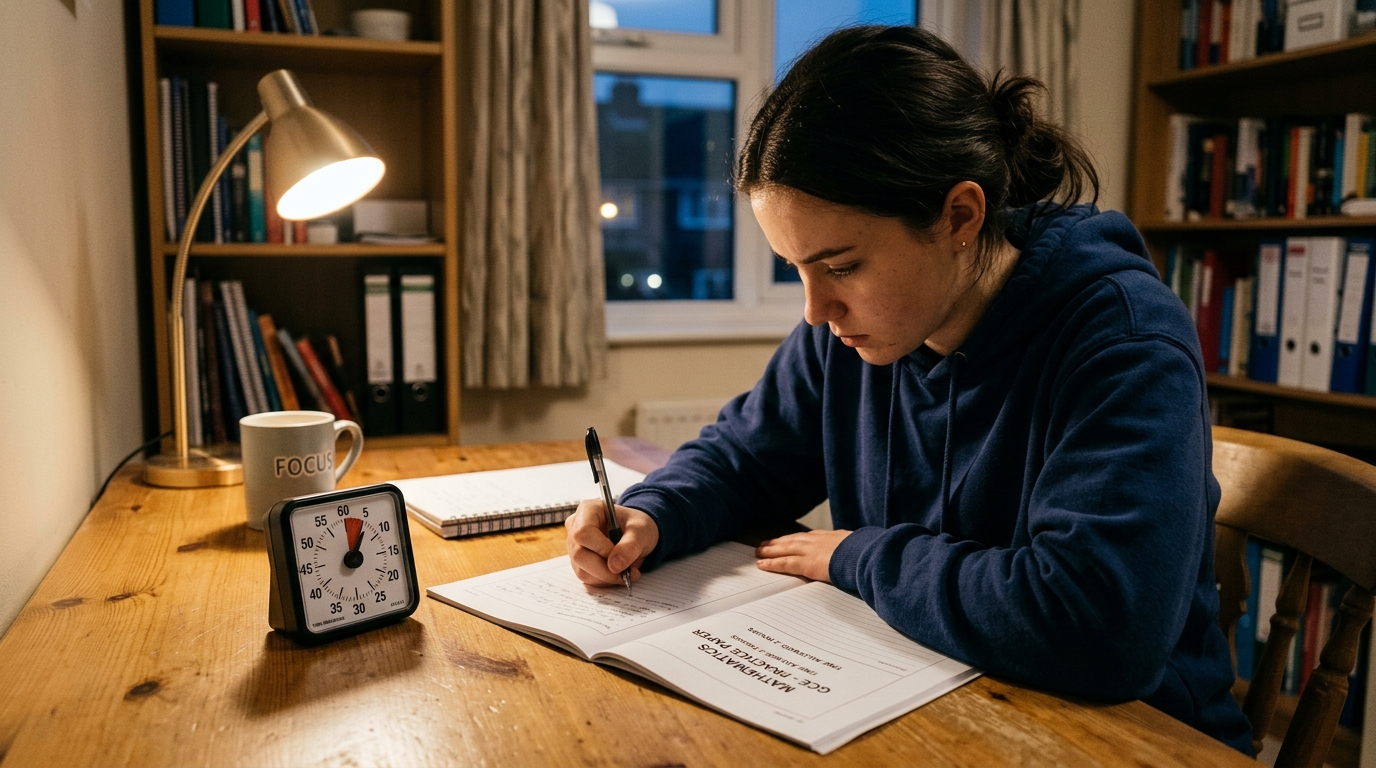
The cognitive cost: working memory depletion in a 2 hour paper
To understand why capable students hit a wall, you must look at how the human brain processes an exam paper. Unlike long-term memory (which stores rules, formulas, and vocabulary), working memory is the conscious workbench where active problem-solving occurs.
In an exam setting, working memory carries a massive, concurrent burden:
- Deciphering dense command words: Parsing what an examiner actually wants in multipart questions, such as the extended response requirements analysed in our guide on why IGCSE Biology students lose marks on 6-mark questions.
- Suppression of exam anxiety: Keeping distracting thoughts about time limits from overwhelming executive focus, as detailed in our guide on exam panic right before major tests.
- Motor endurance and transcription: Sustaining clear, legible handwriting across thousands of words so examiners can award method marks without ambiguity.
- Multistep error checking: Verifying negative signs in algebraic proofs, applying equations without dropping units in Physics, and tracking stoichiometric ratios in Chemistry.
Working memory is fuelled by glucose and neural vigilance. When a student enters hour two without prior endurance conditioning, cognitive fatigue takes over. The brain instinctively searches for energy-saving shortcuts. It skips reading the last sentence of a prompt. It writes one-sentence answers to five-mark questions. It stops double checking calculations.
How to diagnose the stamina fade at home (the downward mark slope)
Parents often ask our team: "How do I know if my child has a stamina gap versus a study gap?"
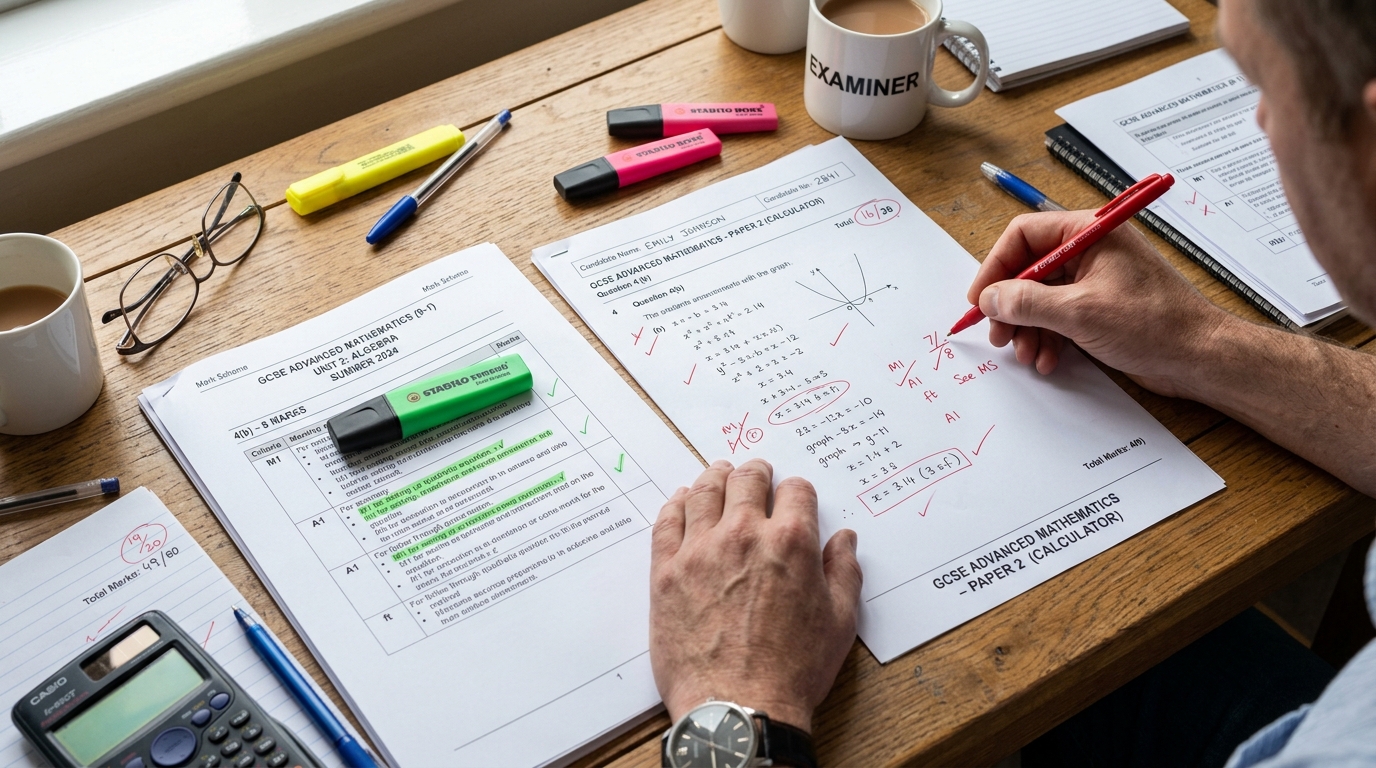
The answer lies in the shape of their mark curve across a timed paper. When reviewing a completed mock against the official mark scheme, we often uncover the disconnect discussed in our article on why understanding a subject does not automatically convert into exam marks. We track mark retention from front to back:
| Paper Section | True Stamina Deficit | Genuine Knowledge Gap |
|---|---|---|
| First third of the paper | 85% to 95% accuracy; meticulous steps | Spotty; struggle begins immediately on basics |
| Middle third of the paper | 65% to 75%; slight rushing, handwriting shifts | Consistent 40% to 50% error rate across topics |
| Final third of the paper | 20% to 35%; blank lines, abandoned working | Identical difficulty to middle sections |
| Error Nature | Silly arithmetic slips on topics they know cold | Conceptual misunderstanding of the syllabus |
If your child's marks slope downward like a ski ramp, reteaching them the topic of Question 18 will not solve the problem. They knew the concept at 4:00 PM; they failed it at 5:15 PM because their mental endurance expired. Spotting this early is crucial, much like learning how to read a UAE school report card like an education counsellor before term end grades lock in.
Stamina problems have an undeniable geometry: a steep downward slope. When marks collapse strictly in the final third of a paper while the first half is pristine, you are looking at cognitive fatigue, not intellectual inability.
Why typical home study actively sabotages exam endurance
Here is the difficult paradox: the conventional way teenagers study at home actually trains their brains to become less capable of sitting a full paper.
Observe an average Year 11 or Year 13 student studying on a weekend. They sit with a textbook, flashcards, or a laptop. Every twelve minutes, they take a micro break: glancing at a message notification, replaying an educational video, grabbing water, or listening to music. Even when they spend three hours at their desk, they are operating in micro sprints of 15 to 20 minutes separated by cognitive relief.
This conditions the neurological threshold to expect rest whenever friction appears. Then, we place them in a silent exam hall with an invigilator pacing the aisles, no phones, no music, and demand two continuous hours of high-stakes analytical output.
In our analysis of study habits, this mismatch between home study and test conditions is the single most common culprit. As highlighted in our guide on why past papers are the critical final step in exam preparation, unstructured studying conditions teenagers for short bursts, leaving them unprepared when a full exam demands continuous cognitive output.
The step by step progressive overload stamina protocol (Weeks 1 to 8)
Because exam stamina is a cognitive capacity, it must be developed using the same principle used in athletic conditioning: progressive overload.
You do not train for a marathon by running 42 kilometres on day one. If you force a fatigued student to sit a grueling 3 hour paper cold, they will crash, panic, and internalise the false belief that they "can't do it."
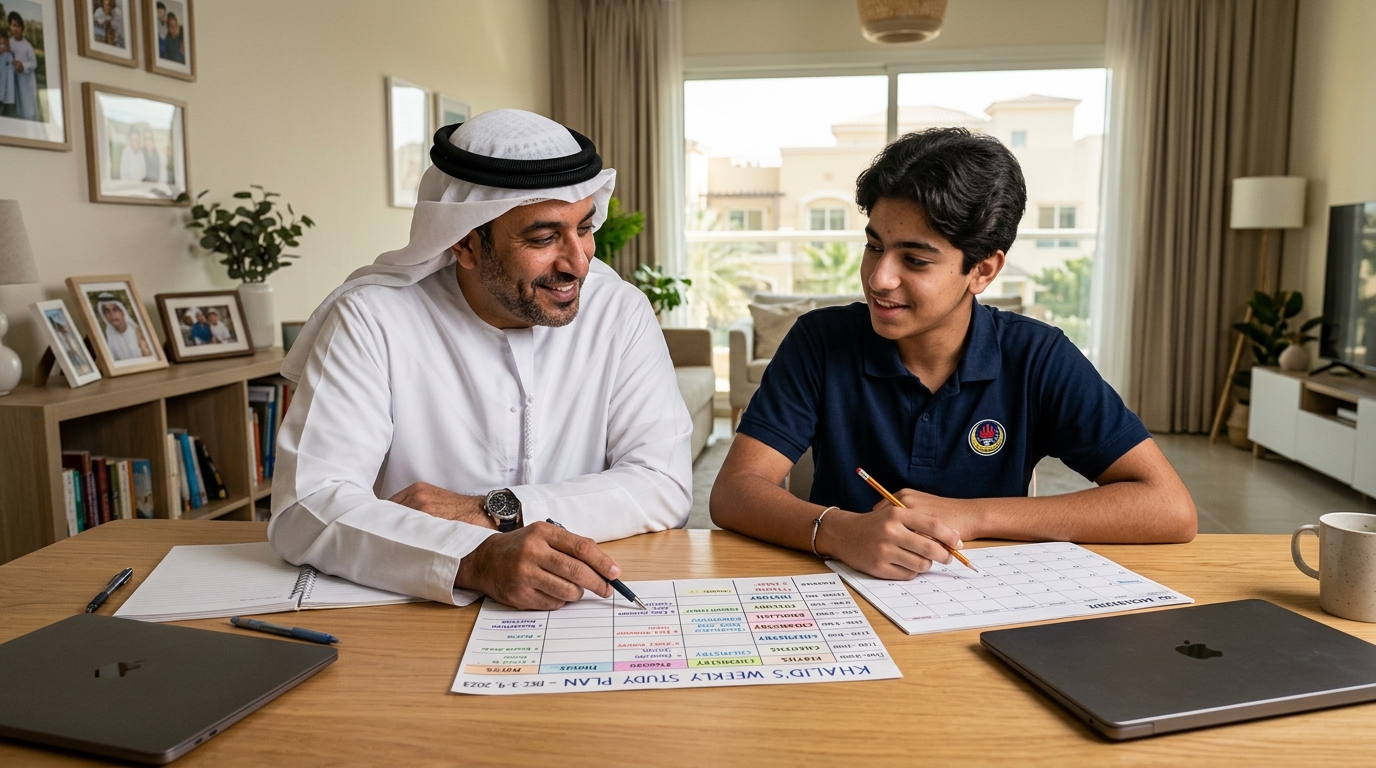
Phase 1: The 40 Minute Anchor (Baseline Unbroken Focus)
Weeks 1 to 2Single subject. Zero phones in the room. A short question set (e.g., 5 to 7 medium-difficulty questions) worked against a ticking countdown clock. The goal is zero pauses, establish rhythm, and end on a feeling of mastery.
Phase 2: The 60 Minute Threshold (Section Endurance)
Weeks 3 to 4Transition from loose questions to an authentic Section A or Paper 1. Introduce mark scheme constraints: exactly 1 minute per mark. Teach the student to recognise the 45 minute fatigue wobble without quitting.
Phase 3: The 90 Minute Full Component
Weeks 5 to 6Sit a complete 90 minute paper under full examination silence. Grade the paper immediately afterward with an examiner mark scheme. Log exactly which question numbers suffered from rushed arithmetic or shortened prose.
Phase 4: Full Paper & Dual-Session Rehearsal
Weeks 7 to 8+Rehearse authentic 2 hour or 2.5 hour papers. Once every two weeks, simulate a Double Exam Day (e.g., Morning Maths Paper 1 followed by Afternoon Chemistry Paper 2 with a 90 minute break between) to eliminate exam schedule shock. For senior students, this mirrors the sustained analytical endurance demanded by A-Level independent thinking.
Rule 1: The phone leaves the room entirely. Not on silent, not face down on the desk. Research from the University of Texas found that a smartphone visible on the desk measurably reduced working memory scores, even when the phone was powered off.
Rule 2: Every session must require active production. Reading study guides builds zero endurance. Endurance is built exclusively through output under time: writing solutions, deriving equations, and formulating essays.
Rule 3: Protect deep recovery between drills. Cognitive capacity regenerates during sleep and active rest. Piling four hours of cramming immediately after a timed paper erodes the very neural recovery needed for endurance to expand.
In exam tactical resets: what to do when the wall hits at 75 minutes
Conditioning builds the engine. But what should a student do on the actual morning of an exam when fatigue inevitably threatens their working memory?
Our examination coaches teach students five high impact exam tactics:
- The 10 Second Tactical Reset: At the 60 or 75 minute mark, when thoughts start fuzzing, put the pen down on the desk. Lean back, roll the shoulders, close the eyes, and take three slow nasal breaths. It costs ten seconds; it resets executive function and prevents the frantic rushing that loses 8 marks on the next page.
- Strategic Mark Banking (Question Sequencing): Never spend the first 30 minutes grinding against a high-friction question that drains working memory. Scan the paper during reading time, bank high-confidence marks first, and save difficult unstructured questions for when momentum is secure.
- Pre Exam Glucose Stabilisation: A massive sugar boost (energy drinks, chocolate bars) triggers an insulin spike that leads to an acute cognitive crash around minute 50. Complex carbohydrates, protein, and proper hydration maintain steady cerebral blood flow.
- The Working Memory "Brain Dump": As soon as the invigilator says you may begin, jot down easily forgotten formulas, trigonometric ratios, or citation acronyms on the blank margin of the paper. This offloads working memory so it is not taxed trying to retain static numbers while calculating.
High stamina vs. stamina deficit at a glance
Use this diagnostic checklist to identify whether your child is approaching exam season with genuine athletic endurance or vulnerable sprint habits:
| Observation Dimension | High Stamina Student | Stamina Deficient Student |
|---|---|---|
| Study Block Length | Works comfortably in 60 to 90m unbroken stretches | Restless and seeking dopamine hits after 20 minutes |
| Handwriting Consistency | Even, readable script from Page 1 to Page 20 | Clear at start; degrades into rushed illegible scrawl |
| Practice Fidelity | Full timed sections with strict mark scheme review | Untimed questions with textbook or answers open |
| Final 15 Minutes | Calm error checking and unit verification | Staring blankly at the wall or closing the booklet early |
| Phone Discipline | Phone placed in another room entirely | Phone beside the notebook, vibrating periodically |
Bringing it together: transforming anxiety into predictable exam endurance
When a capable teenager repeatedly fades halfway through their mock exams, the emotional fallout is corrosive. They begin to believe they are "bad at exams" or that all their hard work is useless. Parents grow anxious, piling on more pressure or booking indiscriminate reteaching sessions that fail to address the true root cause.
As Nimra Shahzada highlights across our educational guides, recognising that this is an endurance deficit completely changes the emotional equation. It removes the shame. There is nothing defective about your child's mind; their engine simply has not been conditioned for the distance yet.
And unlike elusive talent or subject intuition, stamina responds to structured training faster and more predictably than almost any other exam skill. Through targeted exam preparation, a student who begins progressive overload six to eight weeks before their real papers will walk into the examination hall knowing exactly what the 90th minute feels like, and having the trained mental reserves to push through it with composure.
Do not wait for the catastrophic mock grade to discover the stamina gap. Start the progressive overload ladder this week, take the phone out of the room, and watch your child transform from an anxious sprinter into a composed, confident marathon finisher.
Frequently asked questions
Related Guides on Psychology of Learning
Exams Are Back. What Changes for Students Who Have Never Sat One
Why the return to external exam halls demands new exam craft after years of portfolio grading.
Academic & Exam SkillsYour Child Understands Physics. So Why Are the Marks Still Low?
How working memory strain and formula translation fail students even when comprehension is sound.
Academic & Exam SkillsHours of Revision, Still Low Marks in IGCSE Mathematics
Why passive textbook review fails to convert into marks on calculator and non-calculator papers.
Academic & Exam SkillsIGCSE Preparation: Why Past Papers Are the Final Step, Not the First
How to sequence content mastery and timed endurance so practice papers build real exam technique.
Writer on learning and the psychology of studying
Nimra writes guides for parents on learning psychology, study skills, and exam craft for Ustaad UAE. She turns common study worries into small, doable steps families can use at home.
MPhil in Education Leadership and Management
Nida checks each guide for accuracy and parent clarity before it is published. See how our editorial review works.
See where your child's exam stamina really breaks down
A one-to-one diagnostic session with an Ustaad curriculum specialist runs your child through an official board specific timed section to map their exact fatigue point and build a personalised progressive training ladder.