
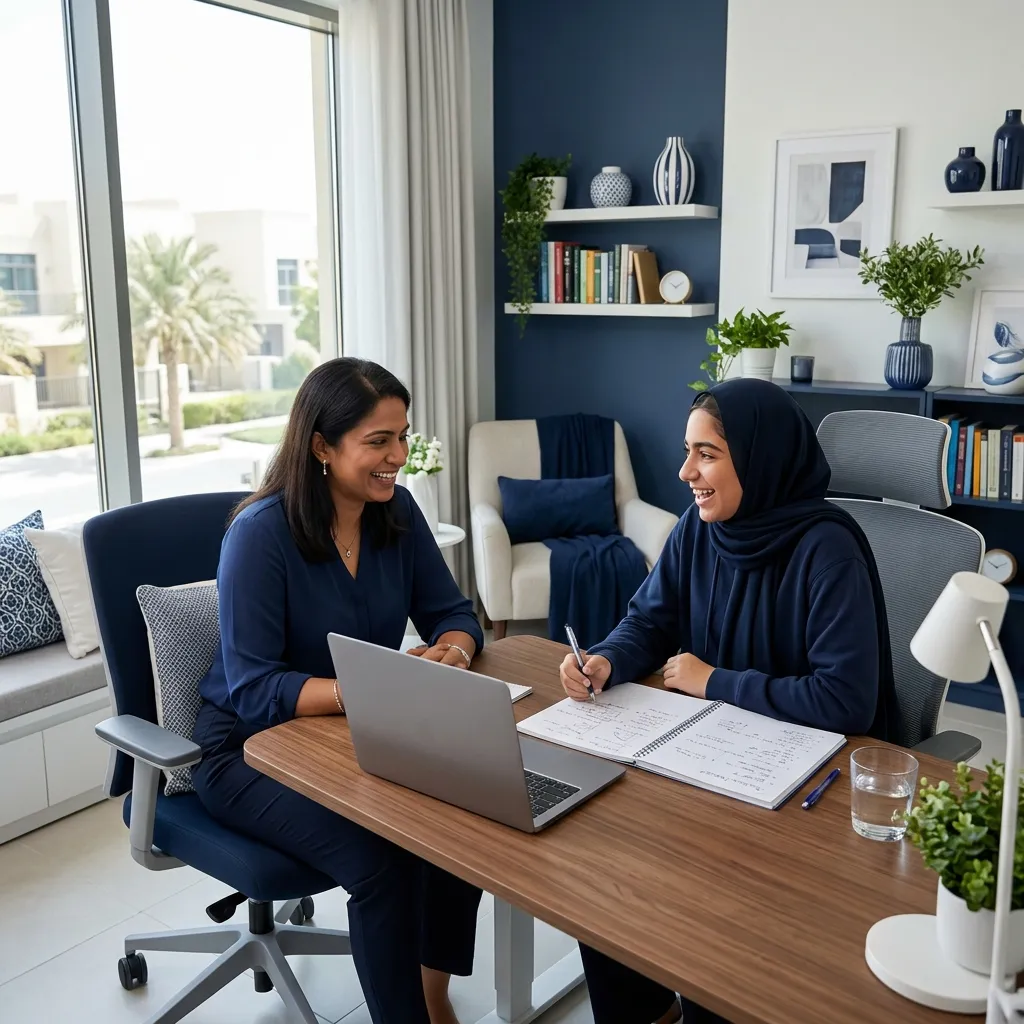
Why you can trust this guide
Every July, a version of the same conversation reaches me. On social media, in parent groups, and in messages from families across Dubai and Abu Dhabi, the worry is always the same. Their teenager has done everything right. They finished the textbook, sat through every revision class and worked through stacks of past papers, yet the grade still will not move past a C or a B.
The question that follows is usually the same too: does my child simply need more practice? Having spent years writing about A-Level tutoring in the UAE and working alongside the tutors who deliver it, I can tell you the honest answer is usually no. What most A-Level students are missing is not another paper. It is the confidence to think for themselves.
What is independent thinking at A-Level?
Independent thinking at A-Level is a student's ability to approach an unfamiliar question without a memorised template: to analyse what is being asked, choose a suitable method, and justify each step on their own.
It draws on critical thinking, metacognition and self-regulated learning rather than recall alone. It is the skill that separates a grade B from an A or A*, because top marks reward reasoning applied to new problems.
The year the exam hall went quiet
This year the point matters more than ever. For the May and June 2026 series, Cambridge, Pearson Edexcel and OxfordAQA all cancelled their A-Level exams in the UAE, a decision taken with the authorities after regional disruption. In place of the single timed paper, each board now builds grades from a portfolio of evidence gathered across the year.
The detail differs by board. Cambridge grades a portfolio of work marked against the syllabus assessment objectives, with teachers confirming the work is the student's own. Pearson Edexcel awards grades from a portfolio that can include past papers, mock exams and predicted grades. OxfordAQA uses banked unit results, or a portfolio assessed by its examiners where a student has none.
The common thread is simple. A grade built from a year of work cannot be crammed the night before. It rewards the teenager who can plan an answer, defend a method and apply an idea to a problem they have not seen before, the exact skill that endless drilling never taught them.

Why more past papers stopped working
Practice is not the enemy. A sound exam technique matters, and methods like active recall and retrieval practice genuinely strengthen memory, which is why they earn their place in revision. The problem starts when families treat volume as the whole plan. They hope the twentieth past paper will unlock the grade the previous nineteen did not.
At A-Level, the top marks are not given for repeating a method from memory. They are given for choosing the right method, explaining why it works, and adjusting when the question changes. That is analytical reasoning, and it is a different skill from recall. A student can memorise fifty worked solutions and still freeze when an examiner rewords the question, because they were trained to remember, not to think.
| Feature | Past paper practice alone | Independent thinking |
|---|---|---|
| Main focus | Repeats familiar question types | Applies methods to unfamiliar problems |
| Skill trained | Recall and speed | Reasoning, analysis and judgement |
| When the question changes | The student freezes | The student adapts the method |
| Fit with 2026 portfolios | Limited; work can look rehearsed | Strong; shows genuine understanding |
What independent thinking looks like at A-Level
When Ustaad's tutors watch two students meet the same unfamiliar problem, the difference is obvious in the first sixty seconds. The dependent student scans for a matching example and stalls when none appears. The self-regulated student annotates the question, notes what is given, asks what the examiner is really testing and commits to a first step even without certainty.
That opening move is everything. In a Cambridge 9709 mechanics question or a 9701 chemistry synthesis, the marks live in the thinking, and that thinking only begins once a student trusts their own judgement enough to start. This kind of cognitive flexibility is not raw talent. It is a trained habit of starting before you feel ready.
Why some students stop improving
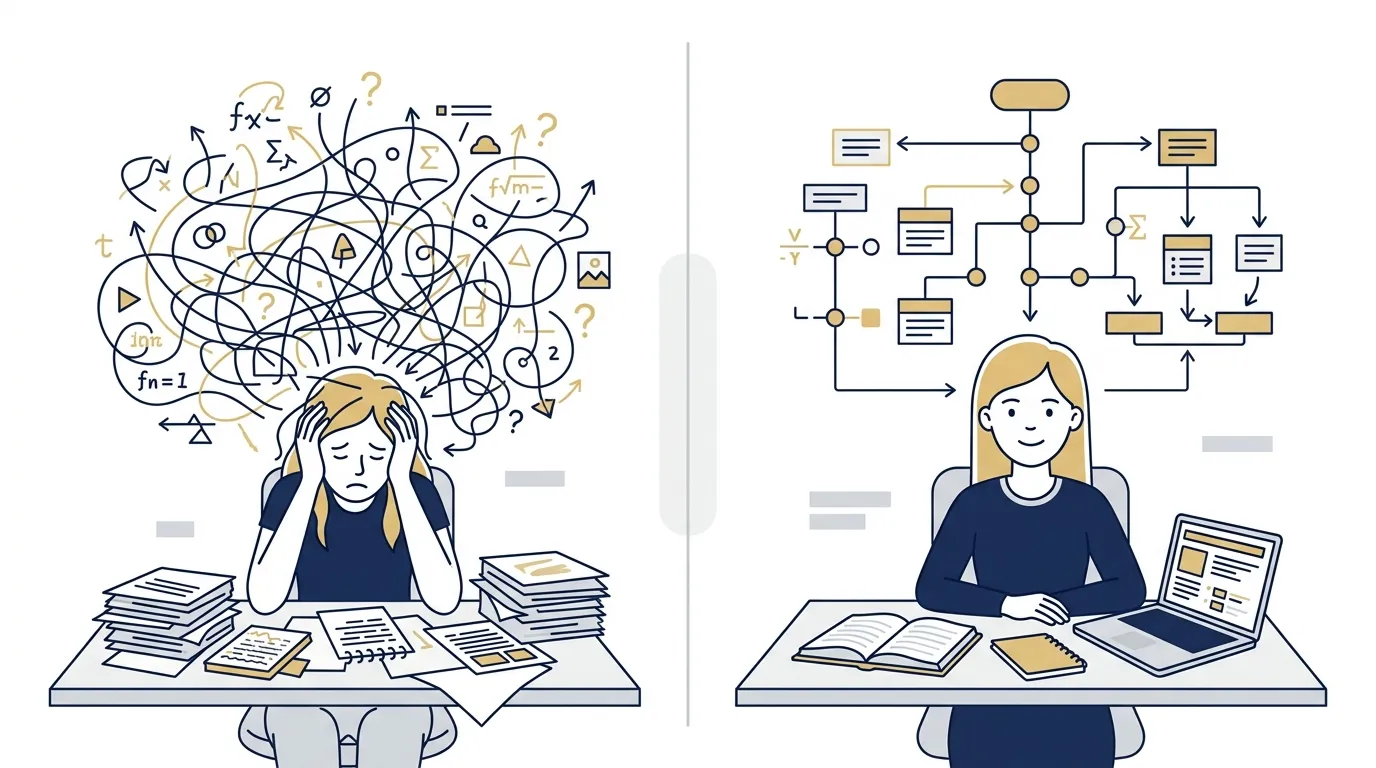
With a background in psychology, I read this stall as an emotional pattern as much as an academic one. Teenagers who have always been rewarded for neat, correct answers can develop a real fear of the blank page. Every past paper studied with the answers open beside it sends one quiet message: the right method already exists, so find it, do not create it. Over a year, this teaches dependence. The student gets good at spotting solutions and anxious about producing their own.
When a dependent student sees a question they do not recognise, their first thought is not "what do I know that applies here?", but "I haven't been taught this." They stop trying to solve the problem and instead try to remember the solution. If memory fails, they freeze. This is the ceiling where grades stop improving, no matter how many hours they study.

How good A-Level tutoring in the UAE develops independent thinkers
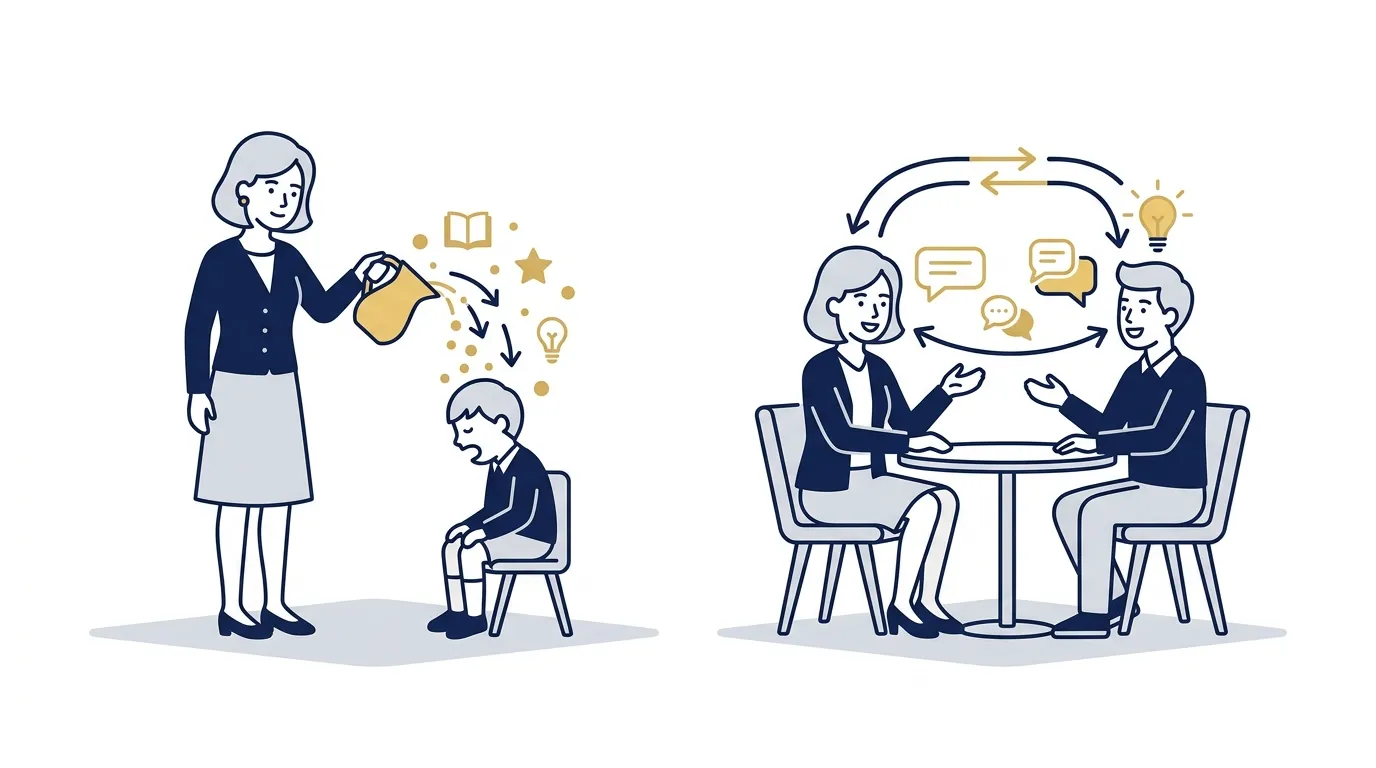
This is where private tutoring often gets misunderstood. If a tutor simply models the answer while the student copies it down, they are reinforcing the dependence. The student feels they understand it in the session, but fails the test on Monday because the tutor's thinking was doing all the work.
At Ustaad, our approach to A-Level tutoring is built around coaching rather than spoon-feeding. A strong tutor uses Socratic questioning, asking the student why they chose a method before confirming if it is right. They let the student make a mistake and trace it back, rather than interrupting to fix it immediately. This builds cognitive resilience, teaching the student that being wrong on the first attempt is part of the process, not a failure.
Real Student Case Studies
Dubai Student · Cambridge 9702 Physics
One Year 13 student in Al Barsha, Dubai, sitting Cambridge 9702 physics, had a wall of past papers and a stubborn C. Her Ustaad tutor stopped marking papers and spent three weeks on a single instruction: explain your first step out loud before writing. Her portfolio work moved to an A because she finally trusted her own reasoning.
Abu Dhabi Student · Edexcel A-Level Economics
A Year 12 student in Al Reem Island, Abu Dhabi, preparing Edexcel A-Level economics, could recite every model but froze on data-response questions. Working with his tutor on exam technique, he practised committing to an argument before checking it against his notes, and his evaluation marks lifted from a low D to a B.
If your teenager is stuck on a plateau like this, a single diagnostic session with an Ustaad mentor can show you exactly where the dependence is holding the grade back.
Based in the capital? See how our A-Level tutoring in Abu Dhabi works one to one, or explore the full A-Level tutoring programme.
Practical tips for parents
You do not need to teach the syllabus to help. You just need to change how you respond when your child is stuck. These five habits do more than any extra worksheet.
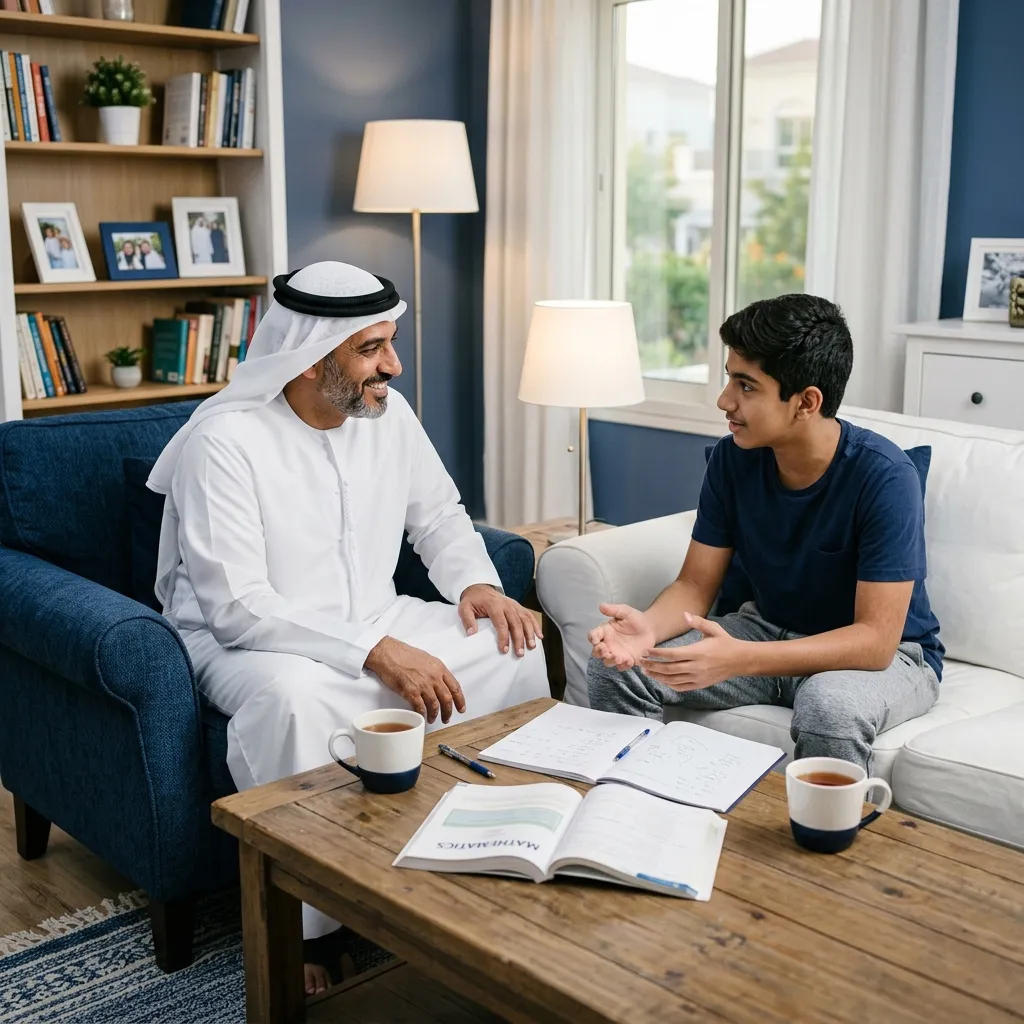
Ask “What have you tried so far?” before you help
It makes your child show their thinking instead of waiting for yours.
Use a ten-minute rule
When they hit a wall, they try alone for ten minutes before asking anyone, so their brain does the first work.
Praise the method, not the mark
Say “I like how you worked that out,” so effort and reasoning feel rewarded even when the answer is wrong.
Keep the model answer closed until they attempt it
Let them produce a first version before comparing it to the mark scheme.
Ask them to teach you one idea a week
Explaining it out loud exposes gaps far better than silently rereading notes.
Free Download for Parents
Keep these five habits on the fridge. Download The Parent’s Independent Thinking Toolkit (PDF), a one-page printable guide you can use tonight.
Download Free Printable PDF GuideFor the emotional side of this, read what UAE parents miss about exam panic, and if your child understands the work but marks stay low, see why understanding does not always show in the grade.
Frequently asked questions
Book a free A-Level trial
Ready to help your teenager think for themselves rather than drill in circles? Book a free trial session of online A-Level tutoring in the UAE. In that first hour, your child's tutor runs a short diagnostic to find where the reasoning breaks down, gives personalised feedback on a real exam question, and maps a simple study plan you keep. There is no obligation, and you leave with the plan either way.
Sources and further reading
Every claim about the 2026 assessment changes and the learning research is drawn from these primary sources:
- •Cambridge International: Portfolio of Evidence (June 2026 series guidance)
- •Pearson Edexcel: Arrangements for International GCSE and A Level exams, May/June 2026
- •OxfordAQA: Support for schools in the Gulf and Middle East region
- •Education Endowment Foundation: Metacognition and Self-Regulated Learning Evidence Review
Meet the writers behind Ustaad UAE
Our articles are written by content specialists, reviewed by qualified educators, and fact-checked against primary sources before they are published. You can read more about our editorial standards and the people behind each piece.
About the Author
Nimra Shahzada is a content lead at Ustaad with a background in psychology. She writes about the learning habits, motivation and study psychology behind strong A-Level results in the UAE, working closely with the tutors who teach these students.
Reviewed by
Nida Iqbal holds an MPhil in Education Leadership and Management and reviews Ustaad's academic guidance for accuracy and curriculum alignment.
Related Articles for UAE Parents
Exams Are Back in the UAE. What Changes for Your Child
After portfolio grading, what changes for students who have never sat a real paper, and how parents can help.
Physics & Study SkillsWhy Physics Understanding Does Not Mean High Marks
Comprehension is not the same as exam execution. Learn how to bridge the gap between understanding concepts and earning top marks.
Parent GuidanceWhat UAE Parents Miss About Exam Panic Right Before Exams
A closer look at why exam anxiety peaks in the final days before papers, and how parents can help protect working memory.
Parent GuidanceIGCSE vs GCSE: Curriculum Differences UAE Parents Should Know
Understanding British curriculum pathways, exam board variations, and choosing the right track for your child in the UAE.
Need help lifting your child's A-Level confidence and grades?
Our UAE education counsellors and subject specialist tutors can help decode subject reports, identify core learning gaps, and build a targeted revision roadmap.
No commitment. Cancel anytime.
 Ask on WhatsApp