
Sleep and Memory: Why All-Nighters Backfire for UAE Students
Extra revision hours feel productive, but sleep is where memory is actually built. Here is how to plan revision so your child's sleep works for them, not against them.


It is 2:10 a.m. in Dubai. A Year 12 student has been at her desk since dinner, her physics notes spread across it, a can of energy drink beside the laptop. The mock starts at 8:00. She has decided that three more hours of revision beats three hours of sleep.
At 8:40 the next morning she reaches question 3, a topic she covered again at midnight, and finds she can only half-remember it. Her mark on the paper is lower than her practice scores from the week before.
She did not revise too little. She removed the step that makes revision last.
This guide explains what sleep does for memory, why trading it for extra study often costs marks, and how UAE families can build revision routines that protect both.
01What sleep actually does for memory
Learning happens in two stages. First the brain takes in information (encoding). Then it has to stabilise that information so it can be retrieved later (consolidation).
A great deal of consolidation happens while we sleep. Research reviewed by Susanne Diekelmann and Jan Born describes how the brain reactivates recently learned material during sleep and strengthens it, helping to move it into more durable long-term storage.
Think of revision as loading boxes into a warehouse, and sleep as the night shift that sorts and shelves them. Skip the night shift and the boxes are still there in the morning, but they are piled by the door and much harder to find in an exam.
Sleep also matters before learning. Matthew Walker and colleagues found that people who were sleep-deprived formed weaker new memories than those who had slept. Studying while exhausted is less efficient, so late-night hours produce less than daytime hours do.
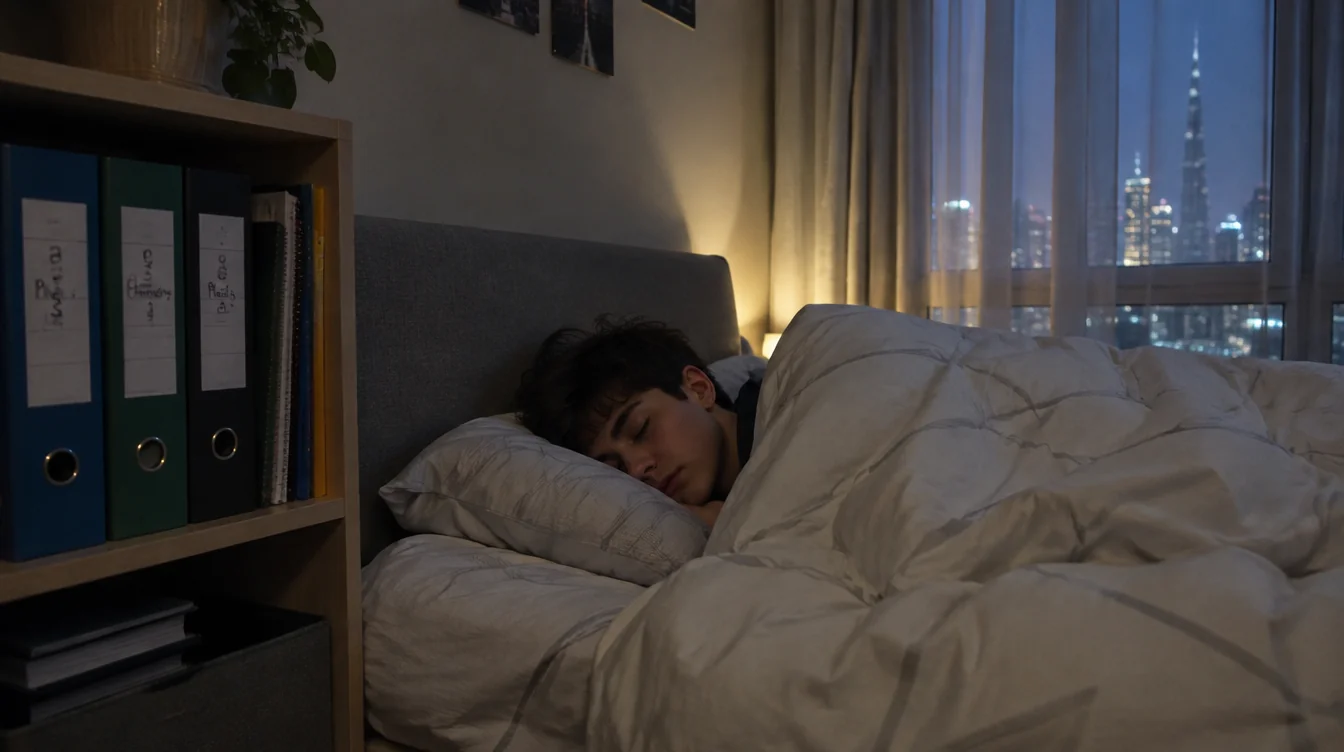
Sleep is not time taken away from revision. It is the part of revision that makes the rest of it last.
02The all-nighter trade: more hours, fewer marks
A diary study by Gillen-O'Neel, Huynh and Fuligni tracked 535 US high school students, who logged their study time and sleep for 14 days in each of grades 9, 10 and 12. On days when students cut sleep to study more, they were more likely to report not understanding something taught in class and doing poorly on a test, quiz or homework the next day. Extra hours bought at the expense of sleep did not pay off.
Part of the explanation is what sleep loss does to the brain's day-to-day tools. A meta-analysis by Lim and Dinges found that short-term sleep deprivation impairs attention and working memory, which are used constantly during an exam: holding a question in mind, choosing a method, tracking multi-step working.
It also tends to hurt in the least noticeable way. A tired student usually still feels capable, but makes more careless errors, reads instructions less carefully and slows down on multi-step problems. This is the same pattern we describe in our guide on Exam Stamina: Why Your Child Can't Sit the Full Paper, where working memory runs short during a long paper. Poor sleep makes that fade arrive sooner.
| Factor | The 2 a.m. session | Lights out at a reasonable hour |
|---|---|---|
| Extra study time | 2 to 3 more hours | None |
| Quality of those hours | Low: tired brain encodes less well | Higher: the day's study was done while alert |
| Consolidation of day's learning | Reduced | Protected |
| Next-morning attention | Impaired | Sharper |
| Exam-day working memory | Under strain | Available |
| Typical result | Familiar-feeling but shaky recall | Cleaner, faster recall |
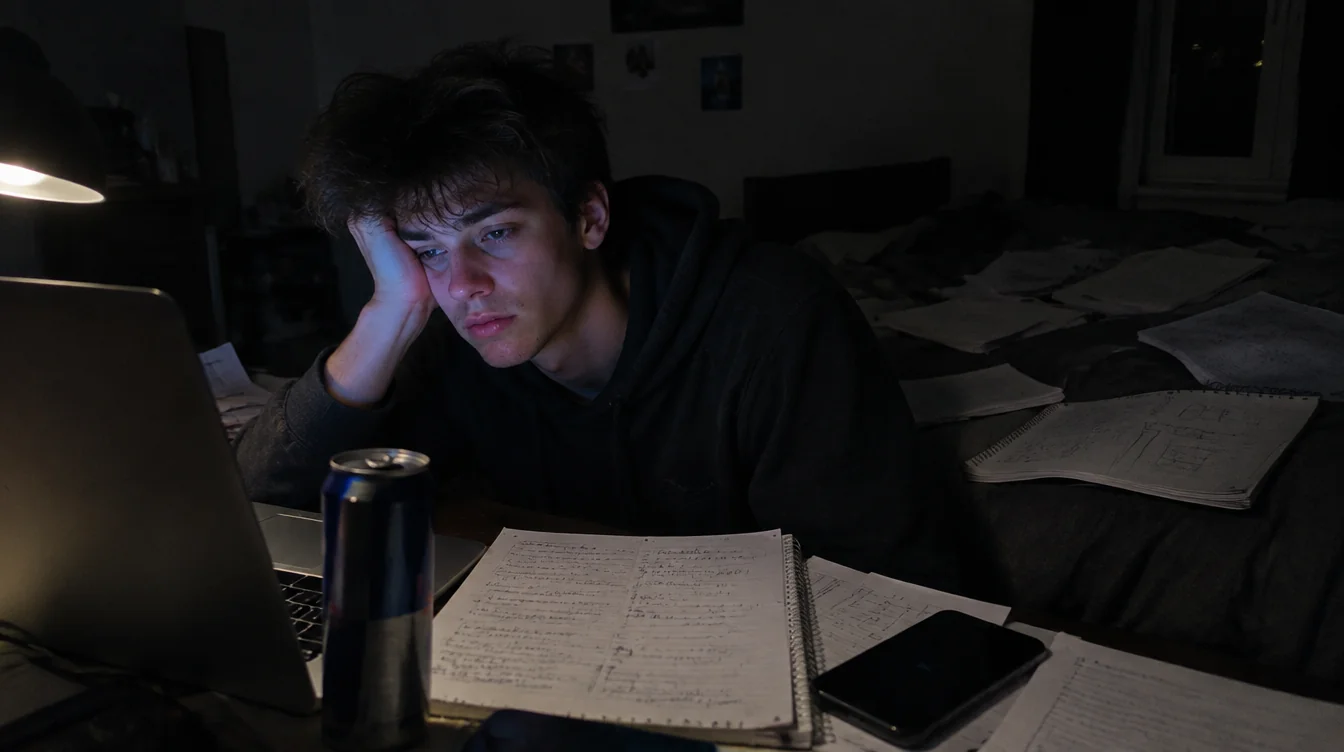
The hours saved by cutting sleep are usually the least productive hours of the day, and the cost lands on the exam.
03Why teenage sleep runs late (and school starts early)
Many parents assume a late-sleeping teenager is being lazy. Biology is part of the story. Mary Carskadon's research describes how adolescence brings a shift in the body clock, so that teenagers naturally feel sleepy later at night and wake later in the morning. She has called it a "perfect storm" when combined with early school starts and busy evenings.
In the UAE, that storm often looks like this:
- A school day that begins early, sometimes with a long bus or car commute across Dubai, Abu Dhabi, or Sharjah.
- After-school activities, sport, music and tutoring that push homework into the late evening.
- Late family meals and social evenings, especially at weekends.
- A phone that stays within reach and turns a "ten more minutes" into an hour.
- Heat that limits outdoor time in the afternoon, so exercise and downtime move to the evening.
The result is a student who is biologically drifting later while the timetable insists on earlier. Add exam pressure and sleep is the first thing to be squeezed.
The practical response is not to demand an earlier bedtime overnight. It is to protect a consistent window and reduce the things that push bedtime later, described below.

04The sleep-smart revision day
Rather than adding hours at the end of the day, move the demanding work earlier.
| Time of day | What to do | Why |
|---|---|---|
| After school (fresh) | The hardest retrieval work: closed-book blurting, past-paper questions | Best attention and working memory |
| Early evening | Second block on a different topic, interleaved | Spacing and variety help retention |
| After dinner | Lighter tasks: flashcards, formula review, tidy notes | Lower demand, easier to wind down from |
| 30 to 45 mins before bed | A quick, calm review of the day's key points, then screens away | A short review before sleep suits consolidation, and removes "I haven't done enough" worry |
| Bedtime | Consistent lights-out | Gives the brain the night to store the day's work |
What to avoid after about 9:30 p.m.: starting new topics, full timed papers, and anything that raises stress. These tend to keep the brain alert and eat into sleep.
For students following the retrieval and spacing methods in our guide on The Illusion of Competence, this fits neatly: hard retrieval earlier, light review later, sleep in between. If your child needs help building a realistic plan like this, it is a large part of how we approach exam preparation with a 1-to-1 tutor.

05Seven sleep rules that protect exam performance
Keep a steady wake-up time.
Try to stay within about an hour of the school-day wake time, even at weekends. A consistent morning helps the body clock more than an occasional early night.
Charge the phone outside the bedroom.
A visible or buzzing phone invites "just one more scroll". A cheap alarm clock solves the excuse.
Set a caffeine cut-off.
Stop energy drinks and strong caffeinated drinks by mid-afternoon, since caffeine stays in the body for hours.
Dim the evening.
Lower lights and screens in the last hour. Whether or not blue light itself matters much, engaging content is what keeps most teenagers up.
Cool, dark and quiet.
In the UAE climate, a comfortably cool bedroom and blackout curtains make a real difference, particularly on bright mornings.
Use naps carefully.
A short nap of about 20 to 30 minutes in the early afternoon can refresh a tired student. Long or late naps can push bedtime later.
Get morning light and movement.
Daylight early in the day and regular activity help set the body clock and make evening sleep come more easily.
In the week before major papers, treat sleep like a revision task that has to be ticked off each day. Something as simple as a lights-out time on the family calendar makes it visible.

06Ramadan, mocks and shifted sleep
Ramadan currently falls in late winter and moves about 11 days earlier each year. Ramadan 2027 is expected to begin around 8 February, subject to moon sighting. For many families it overlaps with mock exams and the spring-term revision block, which are important stretches of the school year.
During Ramadan, sleep often changes shape: later nights, an early suhoor meal and altered school hours. Total sleep can fall and timing can become fragmented.
Some practical adjustments:
- Shorten and reschedule sessions: Rather than trying to keep the usual load, twenty focused minutes on most days beats an ambitious plan that collapses.
- Choose the best window: For many students, the peak window for demanding work is after iftar once energy returns, rather than late into the early hours.
- Protect total sleep: Keep one consistent core block of sleep, plus a short afternoon rest if the school day allows it.
- Avoid late-night marathons: Marathon sessions trade the following morning's clarity for very little retention.
- Check mock timetables: Ask the school early about how mocks are being scheduled around Ramadan, and use a structured winter break revision plan in December so January starts calmly.
Families with a student who has a medical condition should follow their doctor's advice on fasting and routine. This guide is educational and does not replace medical advice.

07What parents can say (and avoid saying)
Policing bedtime often leads to hidden phones and arguments. Framing sleep as part of the revision plan works better.
| Instead of… | Try… |
|---|---|
| "Go to bed. It's late." | "Let's agree lights-out time together and treat it as part of the plan." |
| "Why are you still awake?" | "What's left tonight that can wait until after school tomorrow?" |
| "You need to stop studying." | "Do a fifteen-minute review, then close it. Your brain will file it overnight." |
| "You always leave things to the last minute." | "Which two topics should we move to tomorrow's first block?" |
| "Sleep is more important than exams." | "Sleep is how tonight's revision sticks. It's part of the plan." |
Some small things that help at home:
- Model it: Households where the whole family winds down at a similar time find it easier.
- Make the plan visible: Keep exam-week schedules visible on the fridge, including sleep, meals and downtime.
- Morning check-in: "How did you sleep?" is far more constructive than "How much did you revise?"

Negotiate a sleep window as part of the timetable, instead of enforcing it as a punishment.
08When poor sleep is more than a habit
Most sleep problems in students come from routines, screens and schedules. Some signs suggest something more:
- Regularly taking a long time to fall asleep, or waking repeatedly, over several weeks
- Loud snoring or pauses in breathing at night
- Extreme daytime sleepiness despite enough time in bed
- Sleep problems alongside persistent low mood, anxiety or withdrawal
- Sleep worries that grow worse as exams approach
If you notice these over a sustained period, speak to your family doctor or paediatrician, and inform the school's pastoral team, who commonly deal with exam-season sleep and stress. This article is general educational guidance and not a substitute for professional advice.
If worry about exams is what's keeping your child awake, our guide on why some children only panic right before exams explains what usually sits behind that panic, and for students who delay studying until bedtime, our guide on why teenagers put off revision shows how to break the avoidance cycle.
09Frequently asked questions
10Sources and further reading
Related Guides on Psychology of Learning
Writer on learning and the psychology of studying. Nimra writes guides for parents on study technique, memory and exam preparation for British and IB curriculum students across the UAE.
Every guide is checked for accuracy, educational validity and parent clarity by curriculum specialists before publication.
Is your child's revision routine costing them sleep?
An Ustaad tutor can look at your child's weekly routine with you, spot where revision time is being wasted or squeezed, and build a realistic plan that protects sleep through exam season. Sessions are online and 1-to-1, for families in every emirate.