
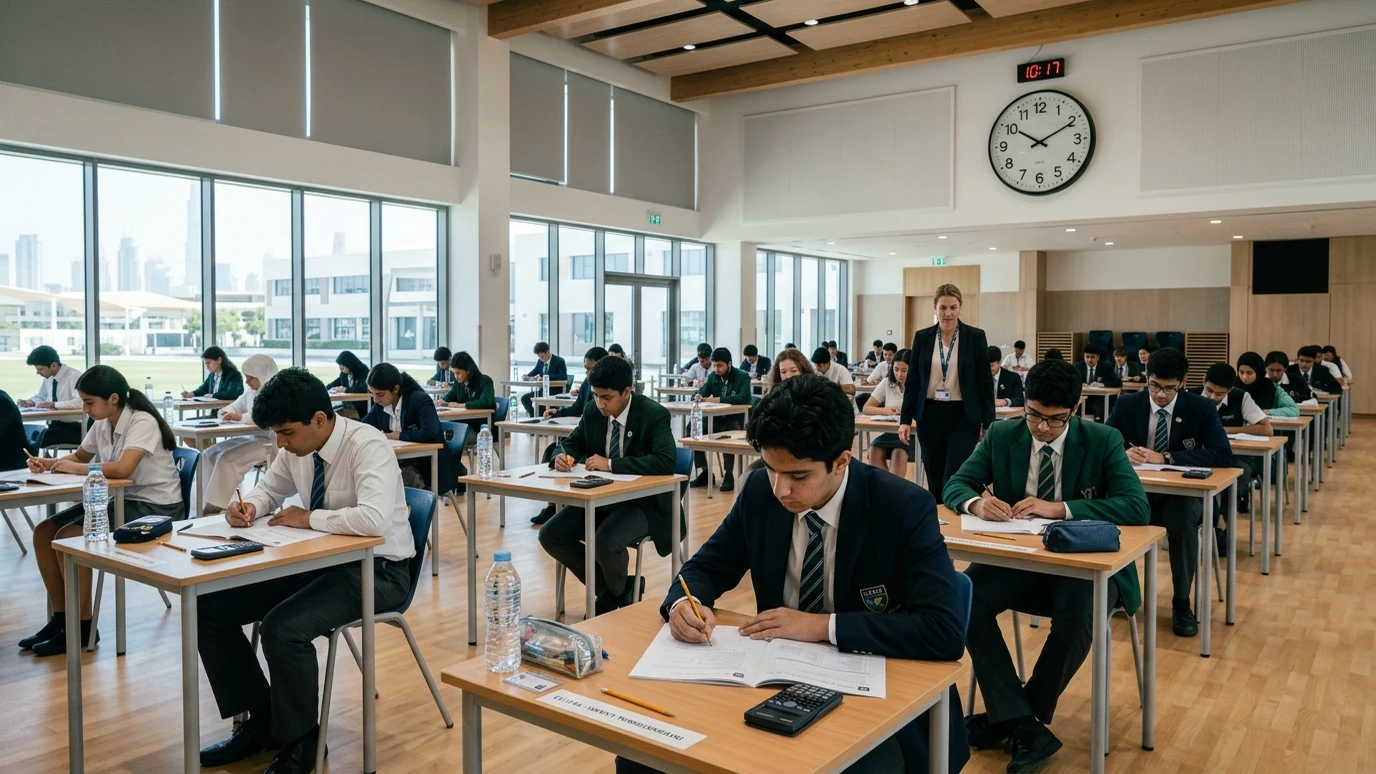
Somewhere in Dubai sits a Year 11 student with a full set of IGCSE grades on paper, a strong report card, and a place in sixth form, who has never once sat in a hall and answered against a clock.
That is not a criticism. Last summer's main series in the UAE was cancelled, and grades came through a portfolio of evidence instead. Results were good. Schools were relieved. Families moved on.
But the next series is expected to run in full. The students preparing for it are the first group in years to walk into an exam hall without a single previous paper behind them. No mocks that counted. No timed papers under real conditions. No memory of what the third hour of a long paper feels like.
Parents have noticed something is different. Most cannot quite say what. This guide names it plainly, and shows what you can do.
Quick answers before you read
What actually happened, in plain terms
In 2026, the three main boards used by British-curriculum schools in the UAE (Cambridge International, Pearson Edexcel and OxfordAQA) cancelled the summer series here. The reason was regional security, not the students or the schools.
Instead of papers, students were graded through a portfolio of evidence. Schools gathered mocks, coursework, classwork and internal assessments. Board examiners marked and moderated that evidence. The IB applied a similar contingency route for Diploma students.
It worked. Grades were issued on time and, across the UAE, results were strong. What it also did, quietly, is remove the one experience every previous cohort had taken for granted, at exactly the age when that experience is usually learned.
Portfolio grading measured something real. It just was not this.
A portfolio grade is not a fake grade. It reflects work a student genuinely did over months, marked by real examiners. If your child earned strong grades this way, they earned them.
But a portfolio measures how well a student can learn and produce when they have time, notes, a teacher nearby, and the chance to revise a draft. An exam measures something different: whether they can produce what they know, from memory, in a fixed format, in a fixed window, alone.
Those are not the same skill. Having one does not give you the other. That is the gap parents are sensing. Their child is capable, has proof of being capable, and has never been asked to show it the way the next paper will demand.
| Dimension | Portfolio Route (2025 to 2026) | Live Exam Series (Returning) |
|---|---|---|
| Working Environment | Familiar classroom or home desk; supportive teacher nearby; calm pace | Silent, invigilated hall; strict desk spacing; ticking wall clock |
| Time & Pacing | Multiple weeks to complete, redraft, review, and polish coursework | Strict 90 to 180 minute countdown; no pauses or extensions |
| Cognitive Retrieval | Assisted retrieval with revision notes, textbooks, and teacher guidance | 100% cold retrieval from memory; zero reference materials allowed |
| Error Correction | Iterative drafting; red-pen feedback acted on before submission | One-shot execution; every lost mark on the paper is final |
| What It Actually Measures | Sustained learning capacity, consistency, and comprehension | Exam craft: speed, stamina, command words, and calm under time |
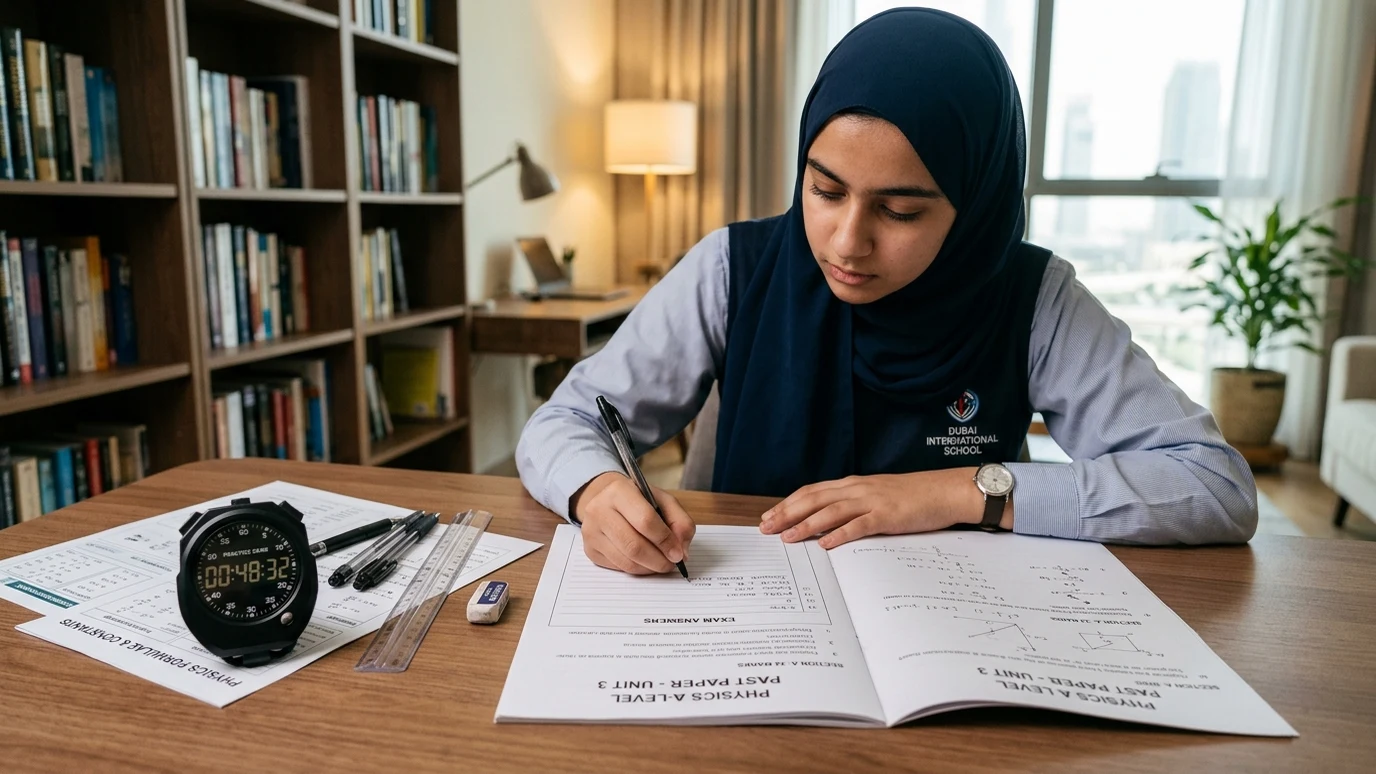
The five things an exam asks for that coursework never did
None of these are about content. Your child may know the syllabus well. These are about what the hall itself demands.
1. Producing Knowledge Cold
Cognitive RetrievalIn coursework, knowledge is retrieved with support. Notes are nearby, teachers can clarify prompts, and students can pause. In an exam, retrieval is completely unassisted. A student who spent the previous year rereading may recognise every topic and still freeze when required to retrieve formulas, definitions, or mechanisms from memory.
2. Working Against the Clock
Time AllocationA two-hour paper is not two hours of thinking. It is 120 minutes minus reading time, arithmetic checking, and recalculating when an answer looks wrong. Students who have never sat against a strict clock either rush early questions carelessly or linger on tough 3-mark problems and leave final pages untouched.
3. Sustained Cognitive Stamina
Focus SpanConcentrating intensely for 90 to 120 minutes without breaks or phone interruptions is physically and mentally demanding in a way school lessons are not. A student can understand the material completely and still fade in the final 30 minutes simply because their mental stamina has never been stretched to paper length.
4. Decoding Command Words Under Time
Exam TechniqueCommand words carry specific mark structures. "Describe" and "explain" award marks differently. "Evaluate" requires a supported conclusion. In coursework portfolios, teachers frequently prompted students to elaborate. In an external hall, markers award nothing for implied reasoning that isn't explicitly stated on the lines.
5. Managing Adrenaline Without a Safety Net
ComposurePrevious cohorts walked into finals knowing what a real paper felt like; they had survived the nerves before. For this cohort, their very first live paper may determine their final grades. Experiencing unfamiliar physical tension without previous conditioning can cause temporary cognitive blanking.
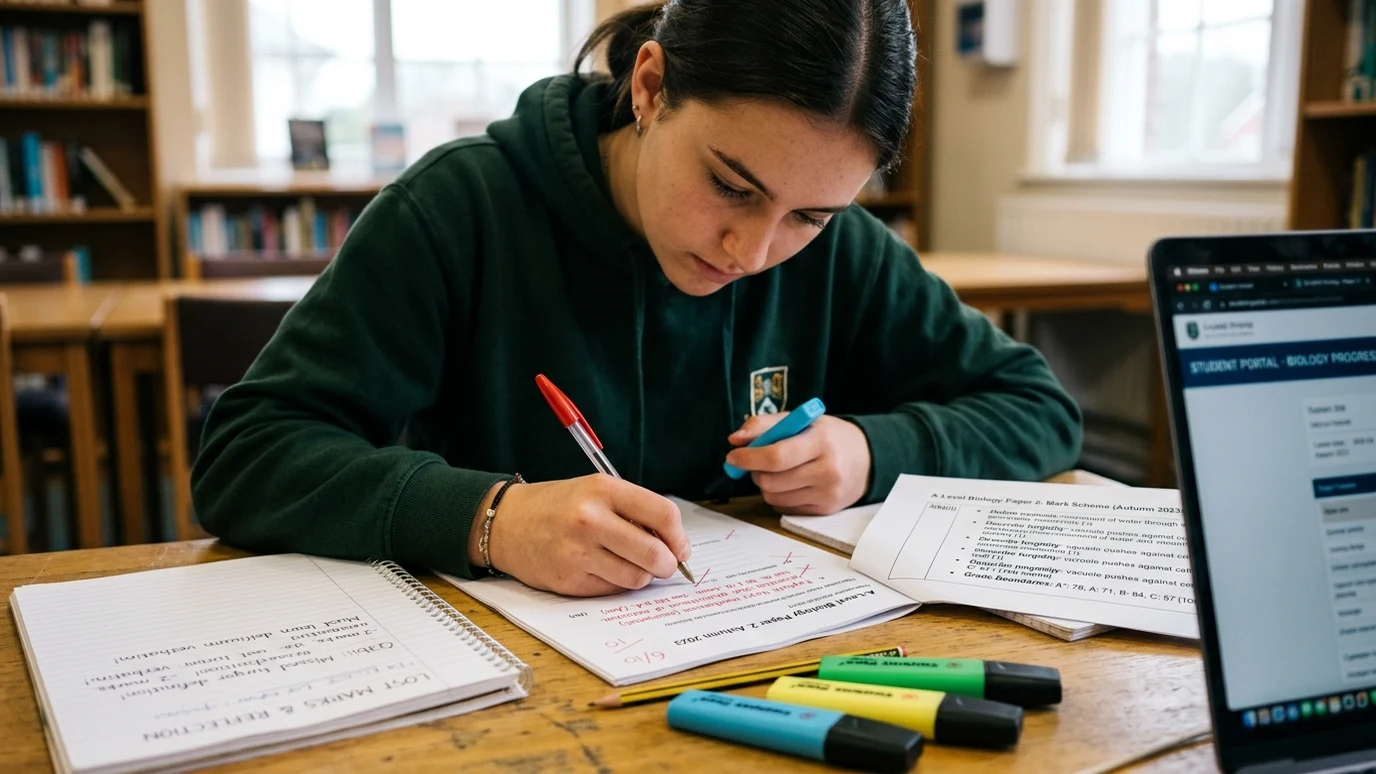
A Year 11 student in Dubai Hills finished Year 10 with a portfolio grade that mapped to a strong 7 in Cambridge 0580. Homework was accurate. Class tests with notes nearby looked solid. In her first full timed Paper 2 this term, under invigilation and with no calculator switch-outs mid-way, she left three multi-mark questions blank and scored a low 5.
The content was not missing. Cold retrieval and clock management were. After six weeks of one timed section a week, marked against the 0580 scheme with lost marks written down, her next mock moved to a secure 6 with time left to check. Families preparing for British-curriculum papers in Dubai often start with board-matched GCSE tutoring in Dubai or Cambridge-aligned IGCSE support so the first timed papers use the right format from day one.
Year 11 and Year 13 face this differently
Year 11 students sat no IGCSE or GCSE papers last year. Many also had reduced end-of-year tests in Year 10. So their first real external paper will be the one that decides their grades. The good news is they have the year ahead and schools will build mocks in. The risk is treating those mocks as low-stakes practice rather than the rehearsal they are.
Year 13 students are in a stranger position. Their A-Level grades last year came from portfolios, and those grades now feed predicted grades for university. They then face full papers with less examination experience than any A-Level cohort in living memory. For competitive courses, that matters: the offer is conditional on results from a format the student has never experienced.
Neither group is doomed. Both need to start the term already knowing the missing skill is exam craft, not content.
| Focus Area | Year 11 (IGCSE / GCSE) | Year 13 (A-Level / IB DP) |
|---|---|---|
| Exam Hall History | Zero prior external exam hall experience | Only internal school mocks; Year 11 was heavily portfolio-weighted |
| Primary Stakes | Sixth Form entry, A-Level/IB subject prerequisites, baseline academic profile | Conditional university offers (UCAS, US, regional tier-1 programs) |
| Typical Failure Mode | Pacing collapse: lingering on 2-mark questions, missing 6-mark essays | Multi-step cognitive fatigue: freezing on novel synoptic application problems |
| Weekly Practice Goal | One 35 to 45 minute timed section weekly + marking against mark schemes | Full 75 to 90 minute uninterrupted paper blocks under strict invigilation rules |
| Key Revision Tool | Command word breakdown & marking lost marks into a dedicated error log | Examiner reports, high-mark model answers, and deep method adaptability |
A Year 13 student on Reem Island held a portfolio A in Edexcel 9CH0 and a predicted A for university applications. In his first school mock this autumn (Paper 1, full timing, no notes), organic mechanisms he could explain in tutorials collapsed under time. He finished twenty minutes early with thin answers on the last two questions and dropped a full grade.
What changed the next month was not more note-making. It was weekly timed 9CH0 sections, stamina blocks that grew from forty to ninety minutes, and treating every mock as invigilated. His second mock recovered to the predicted band. Abu Dhabi families in this position often use board-specific A-Level tutoring in Abu Dhabi or chemistry tutoring in Abu Dhabi so diagnosis starts with a timed paper, not a content reteach.
What parents can actually do
You do not need to become an examiner. Four things make a real difference.
Get timed practice into the term early
Most families start timed past papers a few weeks before exam season. This year that is too late. From early in the term, one timed paper section a week, marked honestly against the mark scheme, does more than any amount of extra revision. The point is not the score. The point is working to a clock and seeing exactly where marks went.
If your child has not started past papers yet, why past papers are the final step, not the first explains how to sequence them properly. For families building a fuller plan, see also GCSE revision tips for UAE parents and our exam preparation overview.
Treat every mock as the real thing
Schools are running mocks more formally this year, partly because last year mock results were submitted as evidence. Encourage your child to treat them that way too: full timed conditions, no notes, the whole paper in one go. A mock taken seriously is the closest rehearsal your child will get.
Build stamina like a physical skill
Because that is what it is. Start with forty-minute focused sessions and extend by ten minutes each week until your child can hold concentration for a full paper length. This is separate from revision. It is training the ability to sit, focus and produce without a break.
Watch for avoidance, not just anxiety
A child who is scared of exams sometimes looks anxious. More often, at this age, they look uninterested. Homework gets put off. Past papers get "forgotten". Revision becomes rereading, because rereading feels safe and testing does not.
That avoidance is the signal. If you see it, the answer is not more pressure. It is making the next step small enough to be obviously doable. Not "revise chemistry." "Do these six questions with a timer on."
Good signs and warning signs, at a glance
If you remember nothing else, remember this contrast. It helps you distinguish between normal teenage inertia and genuine exam-craft anxiety.
| Observation Area | Adapting Well | Warning Sign | Parent Action |
|---|---|---|---|
| Timed Drills | Initiates timed sections without parental friction or postponement | Avoids anything with a timer; revises only by passive re-reading | Start tiny: "Let's just do 3 short questions with a 10-minute timer." |
| Marking & Errors | Marks paper honestly against mark scheme; logs lost marks in an error book | Glances at final percentage only, closes paper, or avoids marking completely | Celebrate the mistakes found: "Every lost mark identified here is saved in the real exam." |
| Memory Retrieval | Can explain concepts, steps, or definitions aloud with books closed | Recognises notes when looking at them, but freezes when pages are covered | Switch from rereading to self-quizzing or explaining one concept over dinner. |
| School Mocks | Treats school mocks as vital dress rehearsals and feedback milestones | Treats mocks as an unpleasant chore to "survive" or dreads going to school | De-escalate the grade stakes: emphasise stamina and pacing diagnostics over raw marks. |
| Mindset | Talks about exams as physical skills that respond to deliberate training | Believes exams are an arbitrary threat that simply "happens" to them | Frame exam technique as athletic training: stamina and pacing improve with weekly reps. |
Bringing it together
The students sitting papers this year are not less capable than the ones before them. Many have shown more resilience, finishing courses through a disrupted year and earning grades through sustained work rather than one afternoon.
What they lack is narrow and specific: the craft of the exam hall. Retrieval. Timing. Stamina. Reading the question. Steady nerves. Previous cohorts absorbed those almost by accident. This cohort will have to learn them on purpose.
That is not bad news. Skills learned on purpose tend to be learned better. But it does mean the year cannot be treated as normal, and the mocks cannot be treated as a formality.
If your child is in Year 11 or Year 13, this is the year to make exam practice a habit, not a last-minute scramble. Start early, keep it steady, and let the paper, not the panic, tell you where the work needs to go.
See where your child stands before the mocks do
A short diagnostic session does one thing: it puts your child in front of a timed section of their own board's paper, marks it honestly, and tells you which of the five skills above needs work. No teaching on the first day. Just a clear picture of where the gap is.
We match students across the UAE with tutors who know their exact board and tier (Cambridge, Pearson Edexcel, OxfordAQA or IB) in Dubai, Abu Dhabi, Sharjah and every emirate, in person or online. If you have never hired support before, ten honest questions to ask first will help you judge the fit. Abu Dhabi families looking for British-curriculum timing practice can also start with IGCSE tutoring in Abu Dhabi or GCSE tutoring in Abu Dhabi.
Bring this article with you. No commitment.
Frequently Asked Questions
Related Articles for UAE Parents
What UAE Parents Miss About Exam Panic
Why last-minute exam panic usually traces back to quiet pressure earlier in the term.
AcademicIGCSE Preparation: Why Past Papers Are the Final Step
How to sequence past papers properly once exam craft becomes the priority.
Parent GuidanceGCSE & IGCSE Revision Tips for UAE Parents
Study skills that raise grades, and how to support your child without taking over.
Psychology of LearningA-Level Tutoring in the UAE Starts With Independent Thinking
Why portfolio years and A-Level papers demand more than more past papers alone.
Writer on learning and study psychology
Nimra writes parent-facing guides on how UAE students learn, revise and cope under exam pressure. She turns common study worries into small, doable steps families can use at home.
MPhil, Education Leadership & Management, Editorial
Nida checks each guide for accuracy and parent clarity before it is published. See how our editorial review works.
Structured academic mentorship and exam-preparation guidance for UAE families who want a clear picture before mocks arrive.
No commitment. Cancel anytime.
 Ask on WhatsApp