
Phone Distraction While Studying: Why Teenagers Lose Focus, and What Actually Works for UAE Students
UAE schools have taken phones out of the classroom. At home, the phone is still on the desk. Here is what the psychology of attention says about phone distraction while studying, and a five-step plan that works without a daily argument.
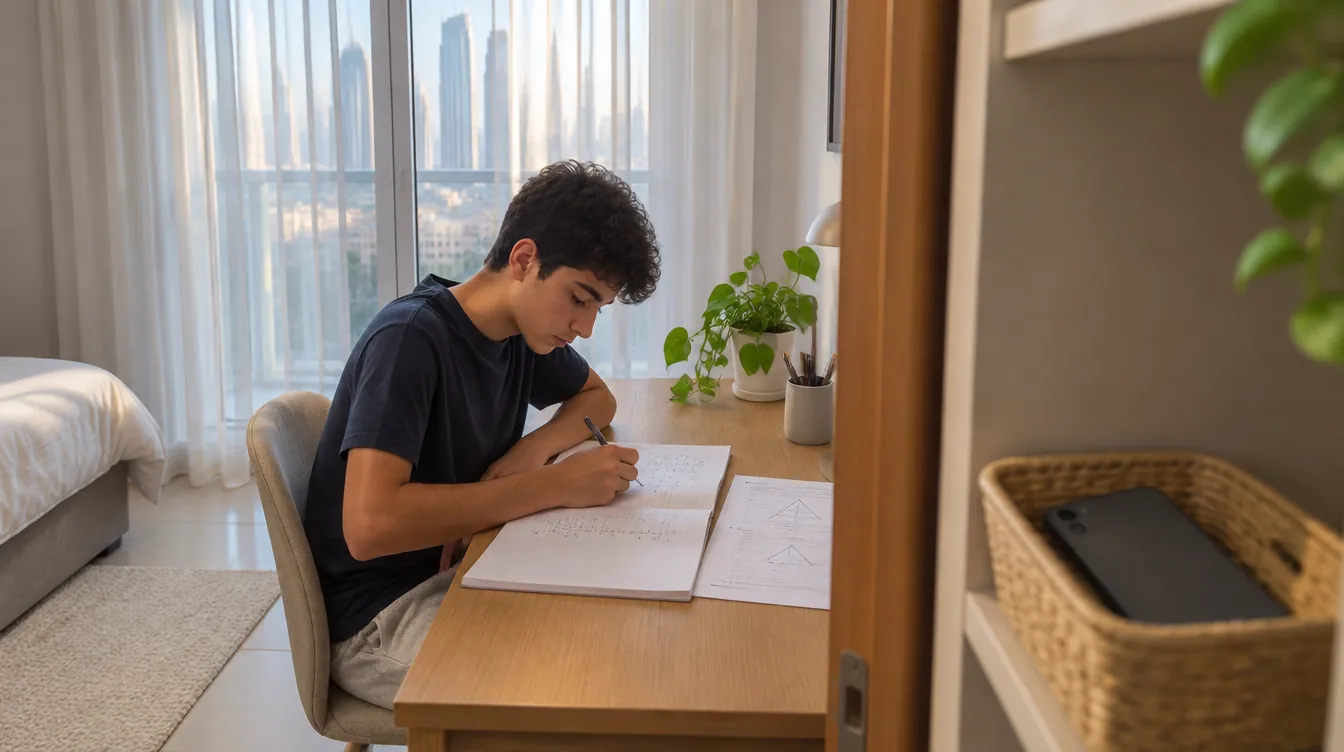
A Year 10 student in Abu Dhabi sits down at 5pm to revise chemistry. At 6pm the notes are open at the same page. Nothing dramatic happened. The phone buzzed, a reply was sent, a short video turned into four, and each time it took a few minutes to find the place again. Ask the student how the hour went and they will say they studied for an hour.
That is what phone distraction while studying usually looks like: not one long break, but many small ones. It is also why telling a teenager to “just focus” rarely works. The problem is not effort. It is how attention works, and the fix is a set-up, not a lecture.
Phones break focus in two ways: every check costs the minutes it takes to refocus, and even an unanswered notification pulls attention away. Silent mode is not enough. What works is a phone kept in another room for each study block, notifications off, blocks of 25 to 45 minutes, and phone time saved for the planned break.
Why the phone wins: the psychology of attention
Attention does not switch cleanly from one thing to another. In a well-known 2009 study, the organisational psychologist Sophie Leroy showed that when people move from an unfinished task to a new one, part of their attention stays behind on the first task. She called this attention residue, and it made performance on the next task worse.
For a student, the “quick check” is the unfinished task. A message that needs a reply, a story half watched, a group chat still moving: the mind keeps returning to it after the phone is back on the desk. So a 30-second check does not cost 30 seconds. It costs the check plus the minutes spent getting back into a quadratic or a source question.
The phone does not even need to be picked up. In a 2015 study published in the Journal of Experimental Psychology, researchers at Florida State University found that simply receiving a call or text notification, without answering it, disrupted performance on a task that needed sustained attention. The alert starts a train of thought that has nothing to do with the work.
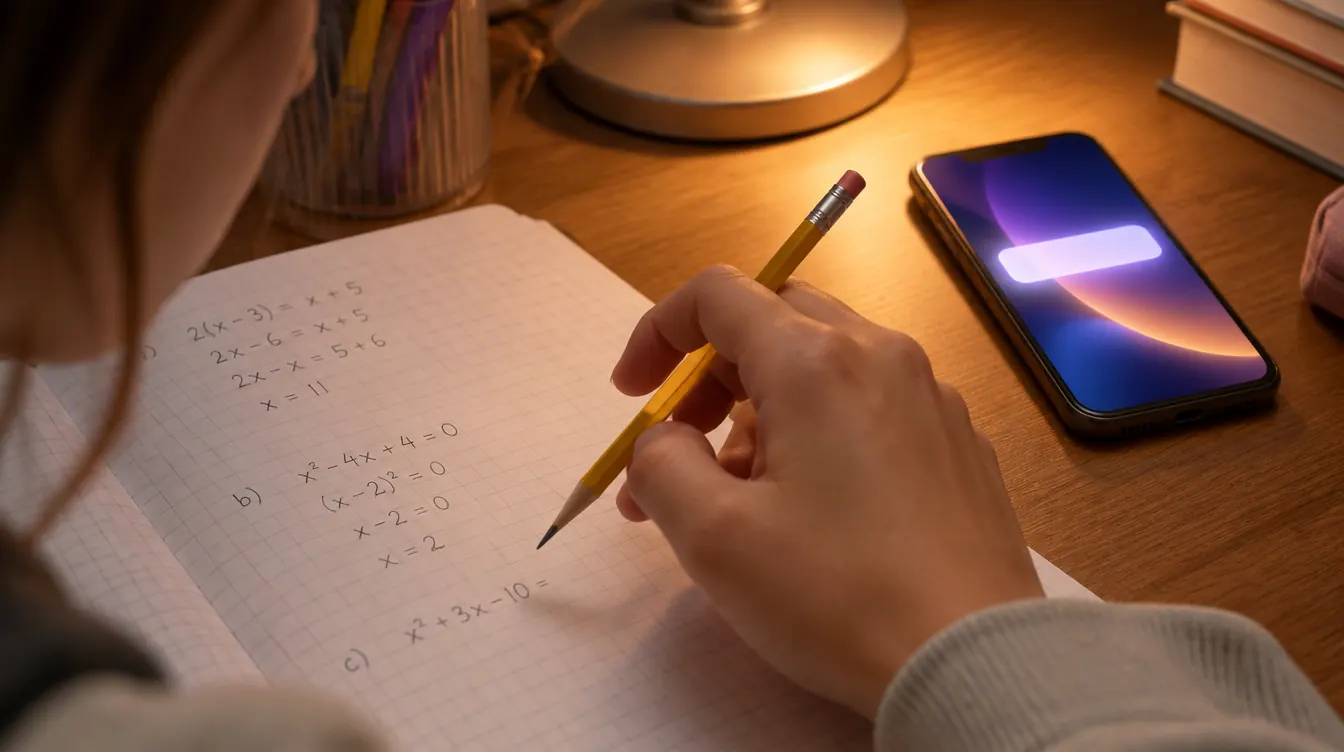
Teenagers are also more drawn than adults to rewards they can have right now, which is why a phone beats a textbook in any contest held on the spot. Our article on why teenagers procrastinate on revision explains that pull in more detail.
Illustration only, to show how short checks and the time it takes to refocus add up.
What the research says about phones and grades
The largest evidence comes from the OECD's PISA 2022 study, which tested 15-year-olds in mathematics across dozens of education systems, including the UAE. Across OECD countries:
- 65% of students said they were distracted by their own digital devices in at least some maths lessons, and 59% by other students’ devices.
- Students distracted by classmates’ devices in some or most lessons scored 15 points lower in maths than students who rarely were.
- Students who spent up to one hour a day on devices for leisure at school scored 49 points higher than those who spent five to seven hours, after accounting for family background.
These are correlations, and the OECD is careful to say so: students who struggle may also be the ones reaching for their phones. The same study found that moderate use of devices for learning was linked to higher scores. The message is not that technology is the enemy. It is that leisure use during study time is.
UAE schools are phone-free. Home is not
The UAE Ministry of Education has banned student phones in public schools and in private schools that follow the Ministry curriculum, as part of its student behaviour rules. Phones found on campus can be confiscated and parents are called in to collect them. Private schools on other curricula, including many British, American and IB schools in Dubai and Abu Dhabi, set their own rules, and many already restrict phones in class.
The result is an odd split. During the school day, many UAE students now work without a phone in reach. Then they come home to revise, often with the phone on the desk and notifications on. Homework, past papers and exam revision all happen in the one setting with no rules at all.
A five-step plan for phone-free study at home
Willpower is the weakest tool here, because the phone is designed to win against it. Each step below changes the set-up instead, so the student needs less self-control to stay on task.
| Step | What to do | Why it works |
|---|---|---|
| 1. Distance | Put the phone in another room for the whole block, not face down on the desk. | Out of reach removes the quick check. Our exam stamina guide covers the research on phones in sight. |
| 2. Silence | Turn on a focus or Do Not Disturb mode for study hours, with calls from parents allowed. | Unanswered alerts still pull attention, so stop them arriving at all. |
| 3. Blocks | Work in blocks of 25 to 45 minutes, then take a 5 to 10 minute break. | A known end point makes the block easier to start and to sustain. |
| 4. Clean stops | End each block at a natural point and write down the very next step. | Closing a task cleanly reduces attention residue when work restarts. |
| 5. Reward | The phone comes back in the planned break, not before. | Instant reward is used for the work rather than against it. |
When the phone is a study tool
Students often need a device for past papers, a calculator app or online homework. Use a laptop or tablet with only the study tab open where possible, download past papers and mark schemes before the block starts, and use a real calculator, which is what they will have in the exam anyway. If the phone must be used, keep it in focus mode with social apps hidden.
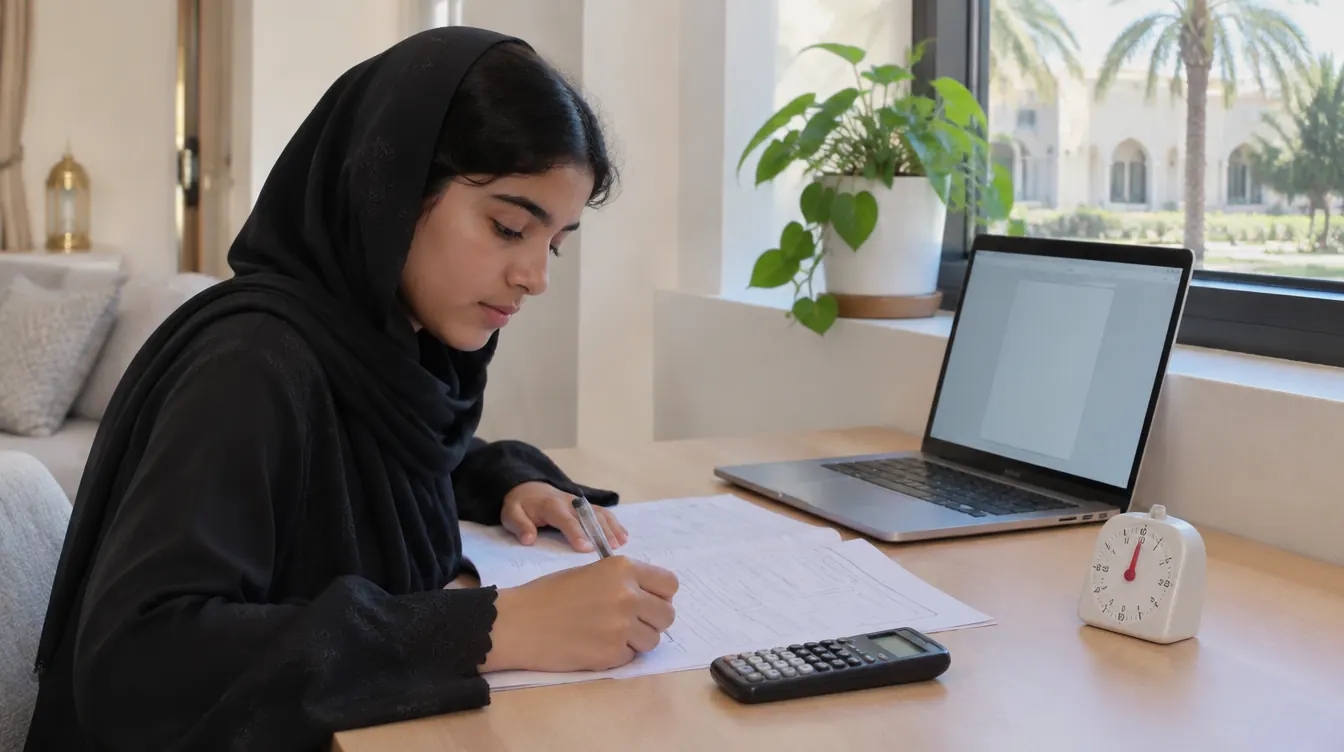
Phone-free time also makes revision itself more honest. Without constant interruptions, students notice which topics they cannot actually do from memory, which is the gap our guide to the illusion of competence warns about.
For parents: making it work without a fight
Taking the phone away as a punishment usually turns study time into a battle and pushes phone use into hiding. These approaches tend to hold up better:
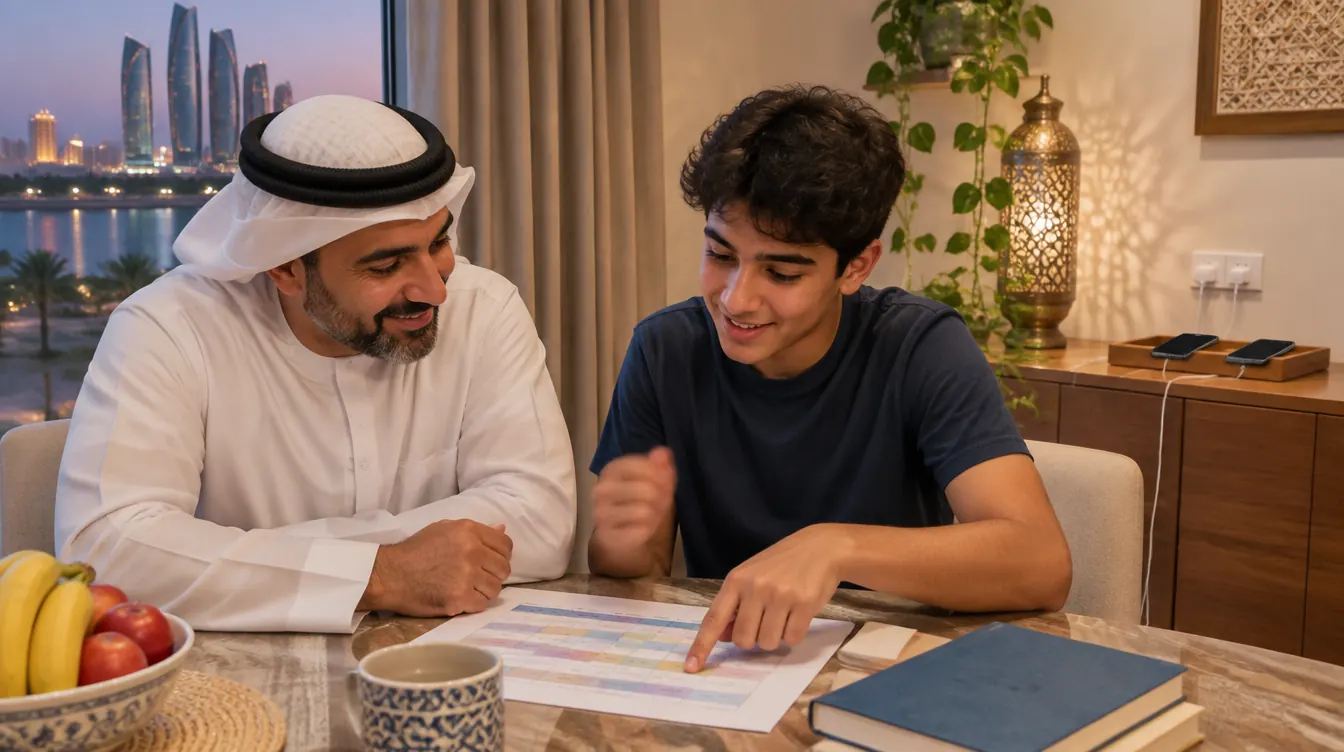
- Agree the plan together: which hours are study hours, where the phone lives, and when breaks happen.
- Set up one charging spot outside the study room and outside the bedroom. Night-time scrolling costs sleep, and sleep is when memory is consolidated, as our guide to sleep and memory explains.
- Keep the same rule for adults during study hours where you can. Students notice.
- Check the work, not the phone. Asking your child to explain one thing they learned is a better measure than minutes logged. Our guide on how much parents should help with homework has more on getting that balance right.
Sometimes phone use is a sign of something else. If your child cannot stop even when they want to, is losing sleep, or seems anxious without the phone, speak to the school counsellor. Avoiding schoolwork can also mean the work feels too hard, which is a learning gap rather than a discipline problem.
Frequently asked questions
Sources and further reading
Leroy, S. (2009). Why is it so hard to do my work? The challenge of attention residue when switching between work tasks. Organizational Behavior and Human Decision Processes, 109(2), 168–181.
Stothart, C., Mitchum, A. and Yehnert, C. (2015). The attentional cost of receiving a cell phone notification. Journal of Experimental Psychology: Human Perception and Performance, 41(4), 893–897.
OECD: PISA 2022 results press release, on digital distraction and maths performance.
Gulf News: UAE Ministry of Education bans phones in schools. Check your own school's policy for the rules that apply to your child.
Hours at the desk, but the marks are not moving?
A focused hour with a subject specialist often does more than an evening of interrupted revision. Lessons are online and 1-to-1, built around a weekly plan your child can follow on their own, and every first 1-hour lesson includes a free 15-minute orientation.
Support by curriculum: IGCSE tutoring · A-Level tutoring · IB tutoring · Private tutoring in the UAE: parent guide
Nimra writes Ustaad's guides on how students learn, remember and revise, turning research on memory and attention into practical steps for UAE families.
Ustaad Editorial Team. Every guide is checked for accuracy and parent clarity before it is published.