
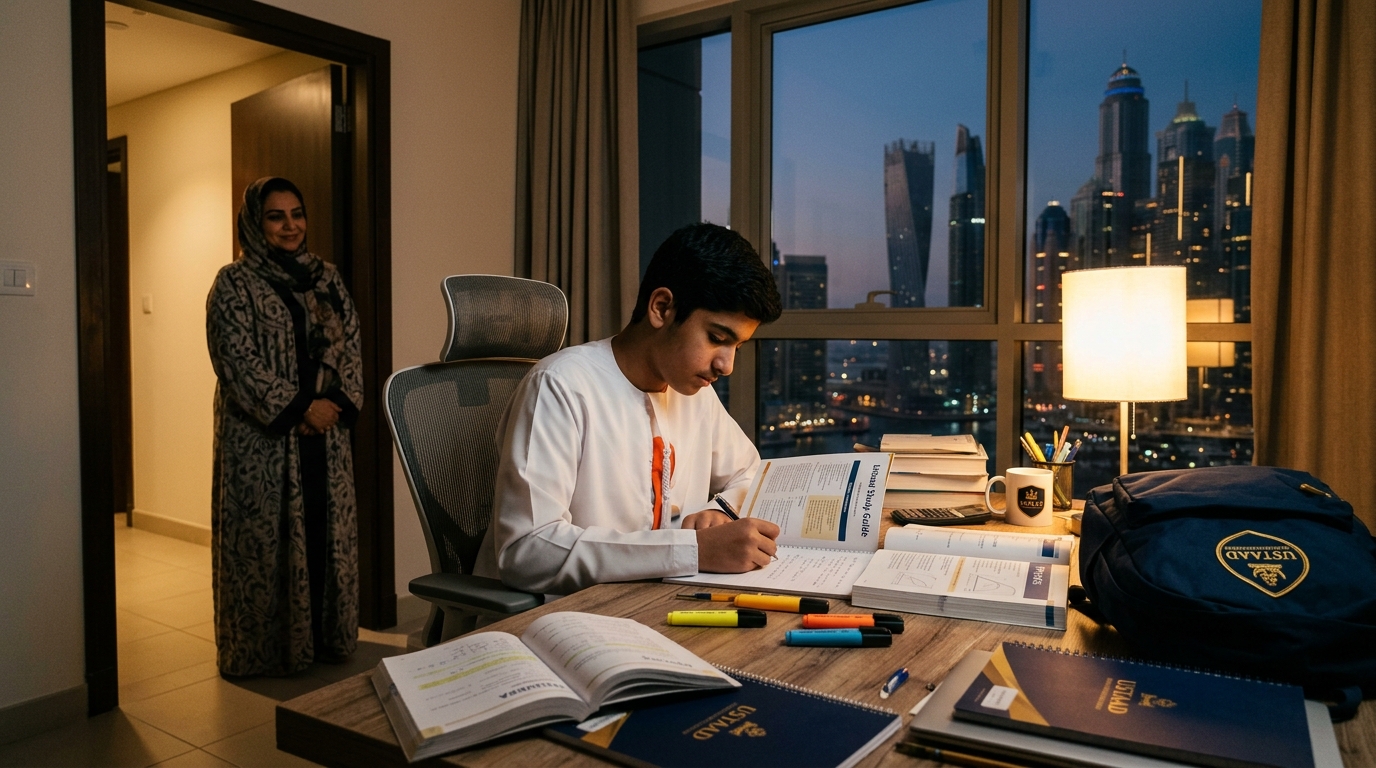
It's a Tuesday evening in Dubai. Your daughter has been at her desk since she got home at four, apart from a break for dinner. Her chemistry textbook is open, her highlighters are out, and the pages are covered in neat yellow and pink. She's been at it for nearly three hours.
Then you ask her what she's been working on. She pauses. She says something about rates of reaction. She can't quite explain it.
Most parents describe a version of that moment, and it's genuinely confusing. The effort is real. The hours are real. So why doesn't it seem to be sticking?
The answer is usually that the child is revising, but hasn't yet learned how to revise. Those are two different things, and the gap between them explains a great deal about GCSE results. The key is understanding how to support your child's study habits: routines that fit a busy UAE school week, not more hours at the desk.
First, Check Which Exam Board and Tier Your Child Is Sitting
This sounds administrative, but it changes almost everything that follows, and a surprising number of parents don't know the answer.
Many British-curriculum schools in the UAE don't deliver the UK-domestic GCSE at all. They deliver an international version, usually Pearson Edexcel International GCSE or Cambridge IGCSE, and some run a mix across subjects. The specifications and assessment structures differ.
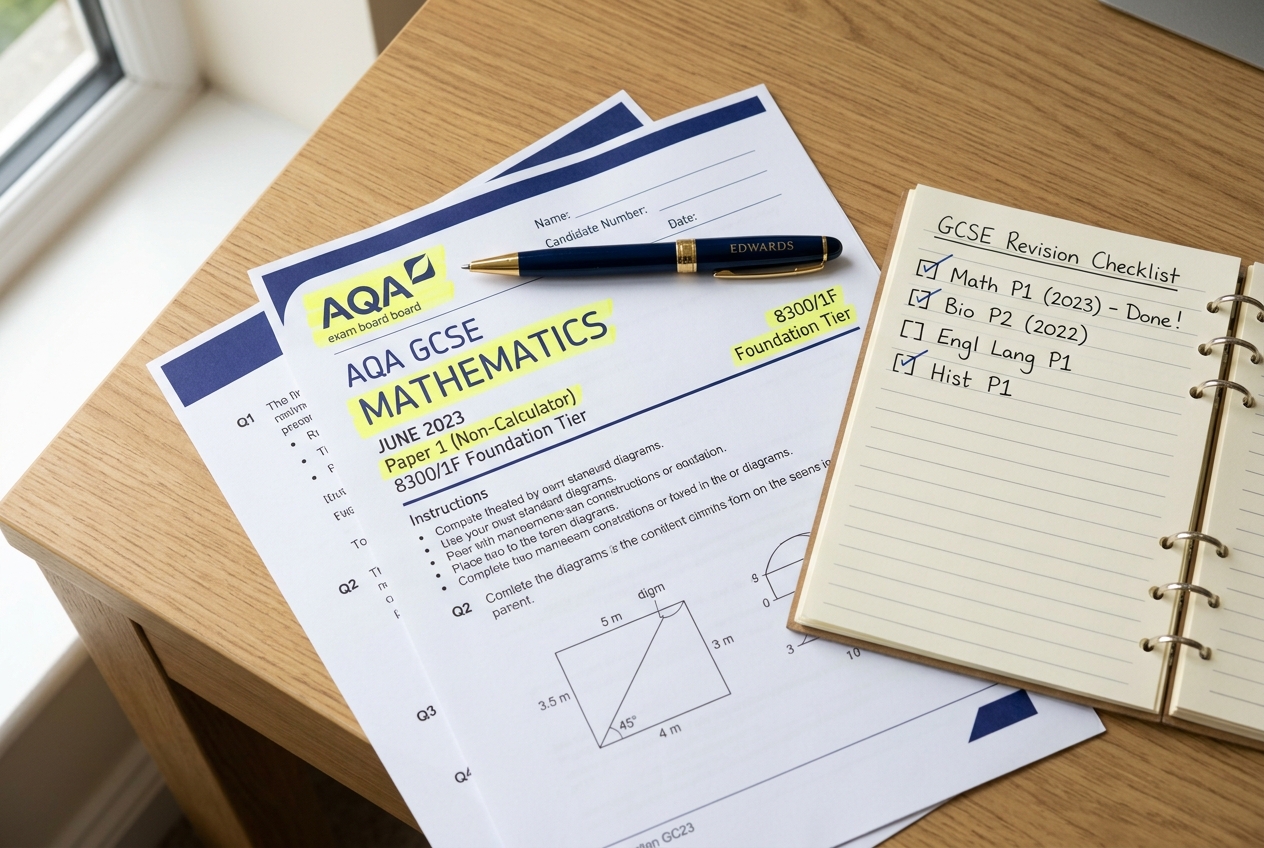
That has one immediate consequence for revision in the UAE. Past papers and mark schemes are board-specific, and in maths and science usually tier-specific too, with Foundation and Higher papers covering different grade ranges. A student working through the wrong board's papers is practising questions they will never be asked. It's one of the most common wasted efforts among GCSE students here, and entirely avoidable. For the right order to use past papers once the foundation is in place, see our guide on why past papers are the final step of IGCSE preparation.
Before serious revision starts, get a written list from school: subject, board, specification code and tier. Every past paper and revision guide gets checked against it.
Why More Revision Does Not Always Mean Better Revision
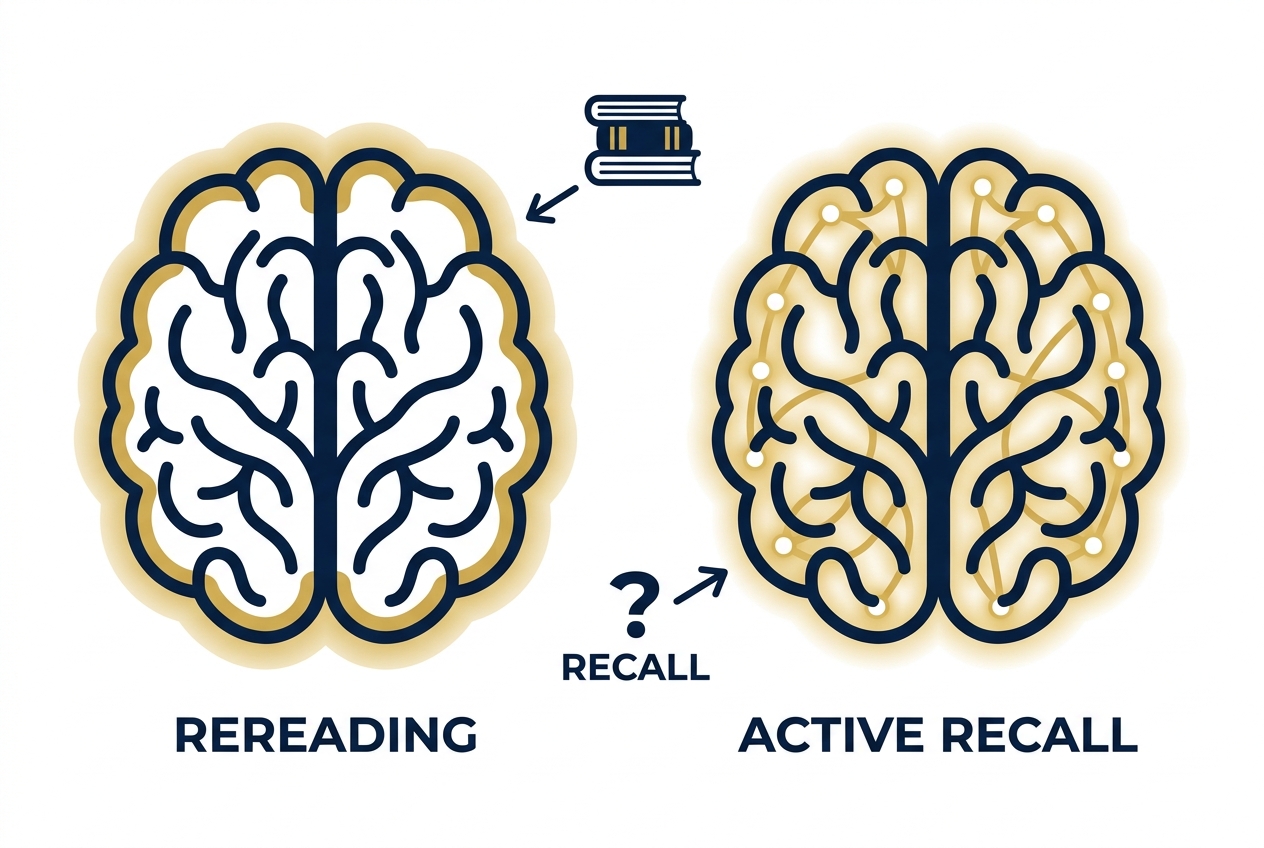
Rereading and highlighting feel productive because they're comfortable. The material looks familiar as you go over it, and familiarity gets mistaken for knowledge. Your child closes the book feeling like they know it, because in that moment they do recognise it.
Recognition and recall are not the same. In an exam, nobody hands you the page. You have to produce the information from nothing, under time pressure, in a format the examiner will accept. If revision never rehearses that, it's rehearsing the wrong thing.
A student who tries to handle the volume of content by simply covering more ground each evening ends up doing a wide, shallow pass over everything and a deep pass over nothing. By March they've seen all the material several times and can reliably produce very little of it.
Most study tips that circulate among students optimise for feeling prepared rather than being prepared. The parents who see the biggest change stop asking "how long did you revise for?" and start asking "what can you do now that you couldn't do last week?"
The GCSE Revision Skills Parents Should Help Build
These are the revision strategies that separate a student who studies for four hours and retains it from one who doesn't. None are complicated, and most schools mention them at some point. Very few students use them without prompting, because the effective methods feel harder in the moment.
- Active recall: The single biggest one. Instead of reading notes, the book gets closed and the student produces the information from memory: everything they can remember about osmosis on a blank page, then a check on what they missed. It feels worse than reading and works considerably better. If your child has ever spent an hour on a biology chapter and then struggled to explain it at breakfast, active recall is the missing piece of their study skills.
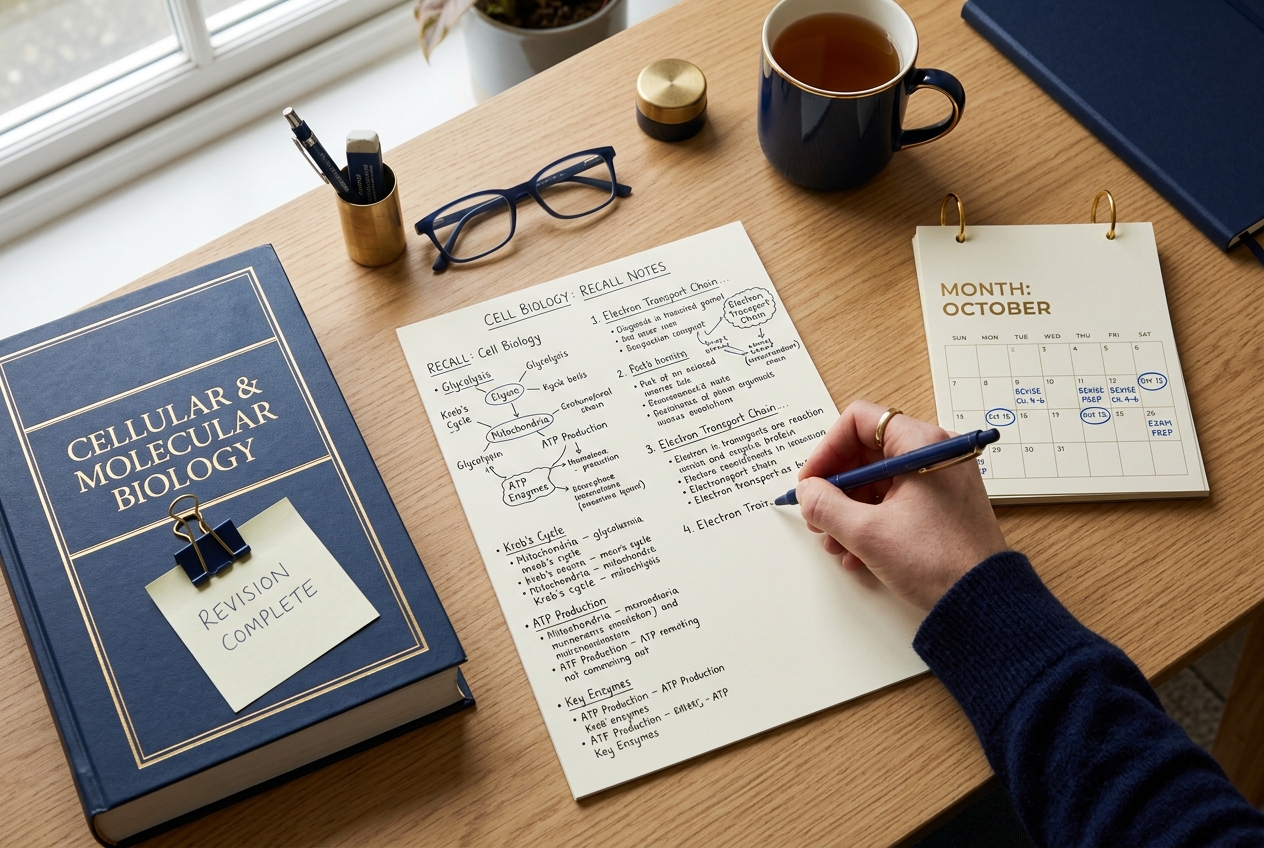
- Spaced repetition: Revisiting a topic after a gap rather than in one long block. A topic covered in October gets tested again in November, then December, then February. Most students revise something once, feel confident, and never return to it until study leave. Spacing is what turns short-term familiarity into something that survives to May.
- Exam technique: Knowing the content and knowing how the paper wants it expressed are separate skills. Command words matter. Mark allocations tell you how much to write. A six-mark question has a structure, and students who've practised it lose fewer marks than students who simply know more chemistry. This is often the fastest available improvement for a child who understands the subject but underperforms in tests.
- Time management and organisation: Knowing roughly what needs covering this week and being able to start without twenty minutes of preamble. Notes that can actually be found, and a record of which topics have been covered and when. Students who lose track tend to revise their favourite subjects repeatedly and avoid the difficult ones indefinitely.
- Identifying weak areas: The skill most students lack entirely. Ask a teenager which topics they're weakest at and many will name the subject rather than the topic. Marking a past paper honestly gives a specific list: not "I'm bad at maths" but "I lose marks on circle theorems and iteration."
- Independent learning: Getting stuck and doing something about it before asking for help: checking the specification, looking up the mark scheme, finding a worked example. Students who can do this improve between lessons. Students who can't only improve during them, which limits how far tutoring or school support can carry them.
These skills transfer into sixth form options and beyond, where the workload rises and supervision drops away. Families who start building study habits earlier, in Year 9 or Year 10, reach Year 11 with the hard part already done.
How UAE Parents Can Support Revision Without Taking Over
There's a particular pressure in the UAE education context. Fees are significant, expectations are high, working with a tutor is widely used, and there's often strong awareness of what other families in the same school are doing. All of it pushes parents toward closer supervision.
It rarely helps beyond a point. A student monitored through every session doesn't develop the ability to run a session alone, which is exactly what they'll need during study leave when nobody is watching.
If you're wondering how to help your child prepare for GCSE exams without it becoming a nightly negotiation, the split that works is this. You own the environment: a workable space, predictable routines, food, sleep, and reduced friction on exam days. Your child owns the studying. You stay involved through conversation rather than surveillance. Our exam preparation guide goes deeper on what that looks like in practice.
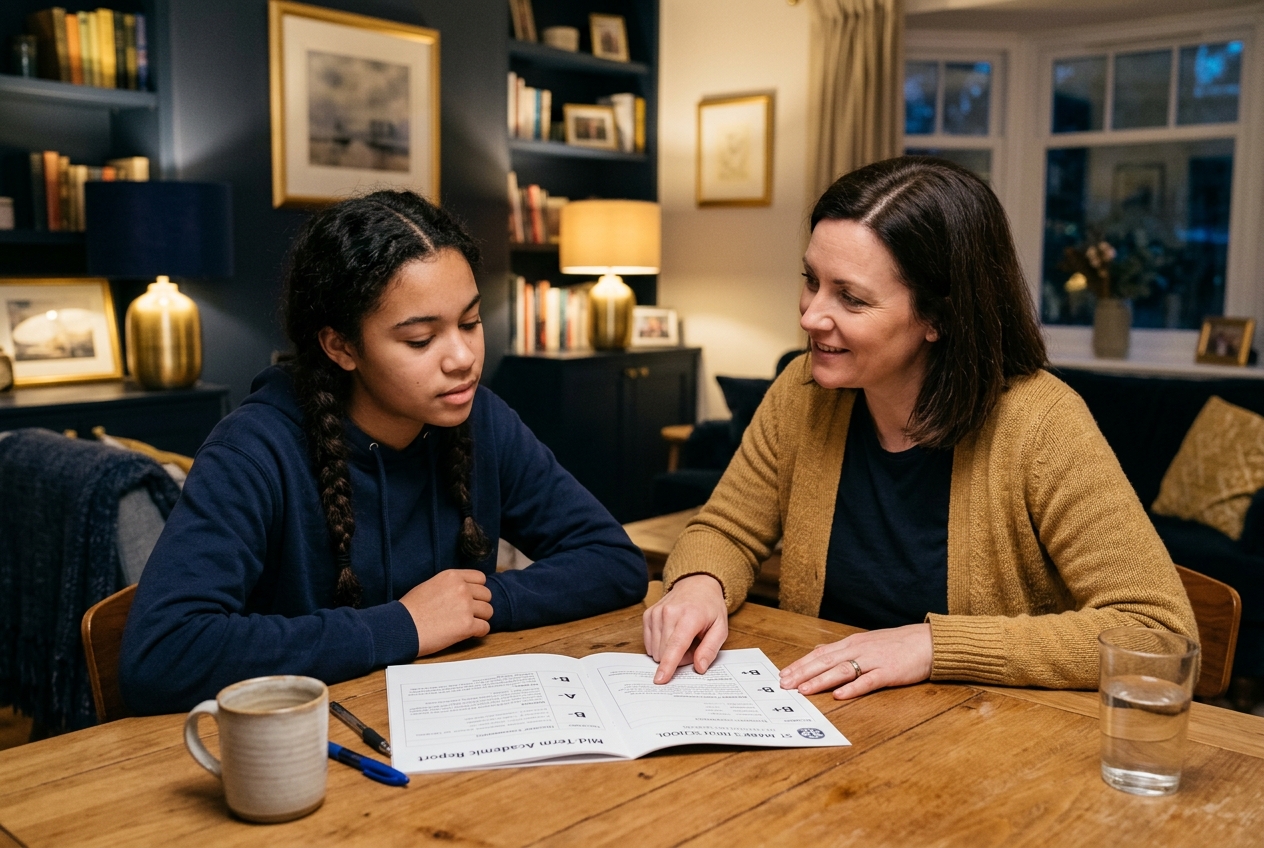
The most valuable question isn't "have you done your revision?" It's "show me something you got wrong this week and what you did about it." That rewards honesty and self-correction, and it's hard to answer with a vague yes.
It also helps to be clear about what each part of the week is for. School delivers the curriculum. Home revision is where retrieval practice happens. And working with a tutor is for something specific: a topic that genuinely hasn't landed after classroom teaching, a subject where confidence has collapsed, or exam technique where the content is solid but the marks aren't. Used that way it's often the fastest route to a grade change.
It stops working when it becomes the default response to every setback and quietly replaces independent practice. Three sessions a week can leave a student with no unsupervised time to test themselves at all. The useful check: after a session, can your child do a question on that topic alone, a week later, without notes? If not, they need less input and more retrieval.

Build a GCSE Revision Routine That Fits Family Life
Realistic beats ideal. A study plan that assumes four uninterrupted evening hours will collapse the first week football training runs late or there's a family gathering on a Friday.
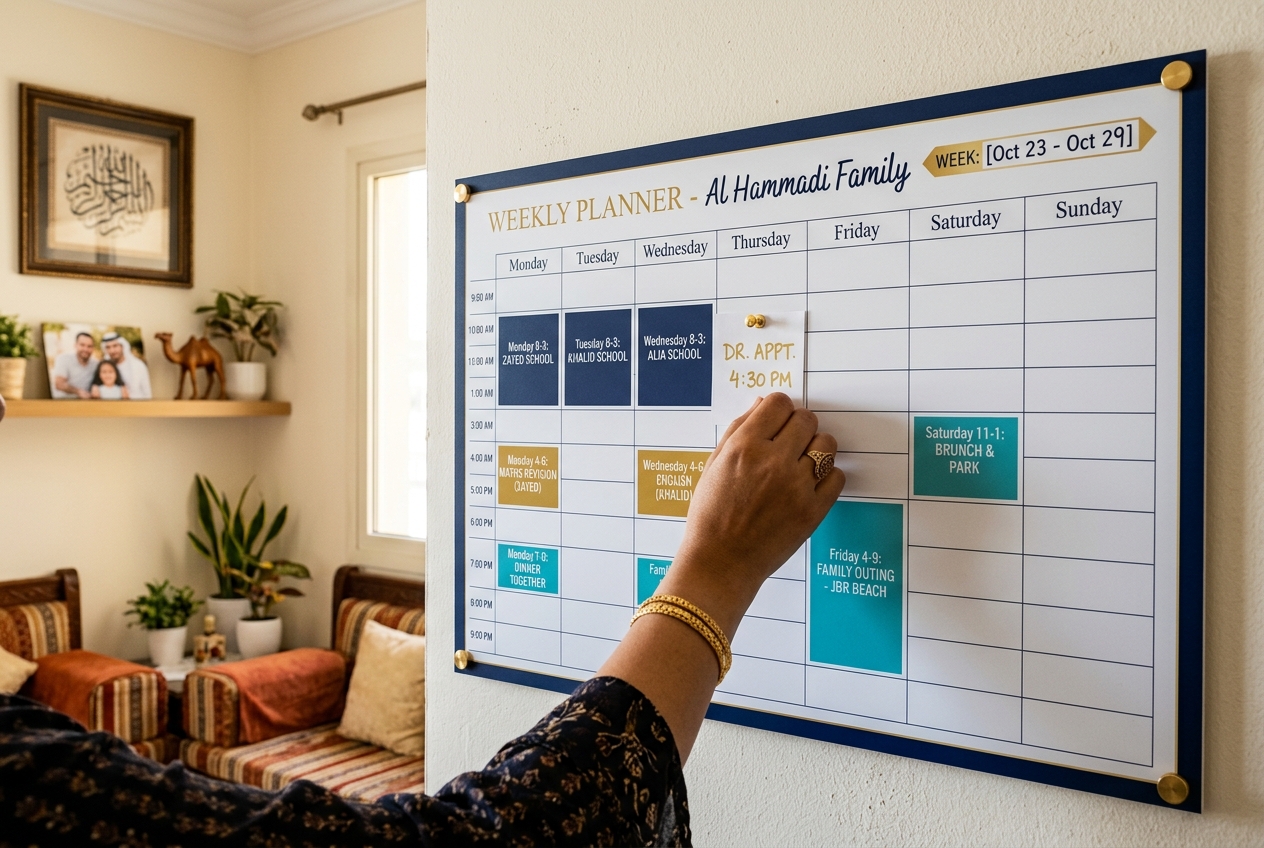
A revision timetable is worth having, but the version that survives a real UAE school week is looser than the colour-coded grid students build on a Sunday and abandon by Wednesday. Build it at the level of the week, not the hour: three or four topics for the week, and a fixed window each evening. What happens inside the window can flex; the window doesn't. Minute-by-minute schedules fail because one late pickup invalidates the whole grid.
Look at the actual week first. School hours, commute, extracurriculars, tutoring, family commitments, and the evenings that are genuinely unusable. What's left is the real budget. In most UAE households, effective exam preparation comes out at an hour to ninety minutes on weekday evenings, with more at weekends, and that's enough if it's spent well. A Saturday morning session before the day gets going beats a Sunday evening one after a full day out.
Extracurriculars are worth protecting rather than cutting. Sport and music keep a teenager functioning, and children who drop everything in September tend to burn out by February. Trimming in the final six weeks is reasonable. Clearing the calendar in Year 11 usually isn't.
Ramadan is worth planning for, though not for the reason most parents assume. It doesn't land near the exam window: papers run from mid-May into June, while Ramadan currently falls in February and moves around ten days earlier each year. What it overlaps with is mock season and the pre-Easter revision block, arguably the two most useful periods in the year. Mocks are where weak topics get identified, and the weeks after are where that gets acted on.
So treat it as a lighter, differently-timed period rather than a write-off or a normal month. Shift sessions to whatever slot works with adjusted school hours and later evenings, shorten them, and protect consistency over volume. Twenty focused minutes most days beats an ambitious plan abandoned in week one. If mocks fall inside it, ask the school early how they're scheduling them, since arrangements vary.
Travel over long holidays is the other common disruption. It's usually more effective to accept that a two-week trip will involve very little studying, and to plan around it, than to pack textbooks that never get opened and generate guilt for the whole holiday.
Use Past Papers as a Learning Tool, Not Just a Final Test
Most students save past papers for the end, treat them as a mock exam, look at the score, and feel either relieved or defeated. That's the least useful way to use them.
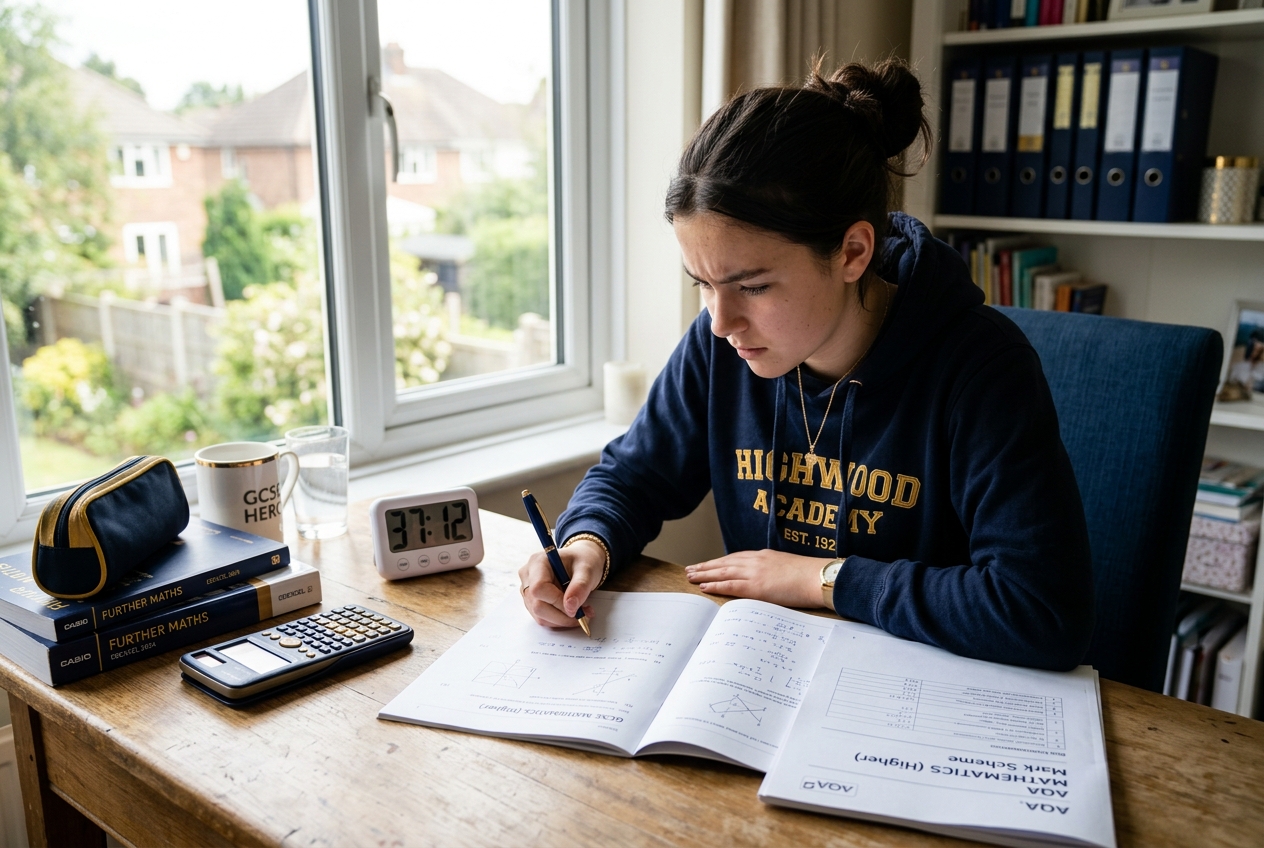
Papers are more valuable early and used differently. Try them from January onward, open-book at first if the content isn't secure. What matters is the mark scheme. Have your child mark their own work against it and write down why each lost mark was lost. The pattern that emerges is the revision plan: which topics need work, and which errors are technique rather than knowledge.
Check the board, tier and specification date on every paper. Boards revise specifications periodically, so an older paper may test content that has since been removed.
One thing worth watching for: when a child says a question was unfair or the paper was strange, it usually means they knew the content but didn't recognise how it was being asked. That's a technique problem and very fixable, but only once it's named as one instead of filed under bad luck.
What Parents Should Do When a Child Is Struggling
Work out which kind of struggling it is, because the responses differ. A child who doesn't understand the content needs teaching. One who understands it but can't retrieve it needs retrieval practice. One who can do both but falls apart in tests has a technique or anxiety issue. And a child who isn't starting at all is usually overwhelmed rather than lazy, so more pressure makes it worse.
That last one is the most commonly misread. Avoidance in teenagers looks like indifference. A student who genuinely doesn't know where to begin with nine or ten subjects will choose their phone over the impossible task and shrug when asked. What breaks it is making the next step small enough to be obviously doable: not "revise physics" but "do these six questions on forces."
If GCSE exam stress is affecting sleep, appetite or mood over a sustained period, that stops being a study problem. Speak to the school. Most British-curriculum schools in the UAE have pastoral staff who deal with this regularly, and they'd rather hear from you in January than in May.
Common GCSE Revision Mistakes Parents Should Avoid
- Treating revision hours as the metric: A child can sit at a desk for three hours, learn nothing, and you'll both feel it was a good evening.
- Getting involved only when results arrive: A conversation in October lands very differently to one in March about a disappointing mock.
- Removing all responsibility: Some parents build the timetable, buy the resources and run the testing, and the child reaches A-Level with no idea how to organise their own learning.
- Assuming resources are correct because they're popular: Revision websites and printed guides are frequently written for the UK-domestic specification. Check the board before your child spends forty hours on the wrong syllabus.
A Simple GCSE Revision Approach for UAE Families
If you want something concrete, this works for most students without much overhead.
Pick the week's topics on Sunday, three or four across different subjects, chosen from wherever the last past paper showed weakness. This is a five-minute conversation, not a planning session, which is why it survives where detailed grids don't.
Each weekday session has the same shape: fifteen minutes revisiting a topic from a previous week, thirty minutes of active recall on a current topic, then fifteen minutes of exam questions with the mark scheme.
On Saturday, one longer session: a full past paper section under timed conditions, correct board and tier, marked honestly, with the lost marks written down. Those lost marks pick next week's topics.
That's the cycle. Roughly an hour on weekdays, a longer block once a week, and it self-corrects because the weak areas keep feeding back in. It's also simple enough that a fifteen-year-old can run it without you. Your involvement is one conversation a week about what came out of Saturday's paper.
The students who do well in these exams aren't usually the ones who spent the most hours at a desk. They're the ones who worked out, somewhere around Year 10, how to test themselves honestly and act on what they found. That's worth more than any individual topic on the specification, and it's the one thing your support can genuinely help build.
Frequently Asked Questions
Related Articles for UAE Parents
Exams Are Back in the UAE. What Changes for Your Child
After portfolio grading, what changes for students who have never sat a real paper, and how parents can help.
AcademicIGCSE Preparation: Why Past Papers Are the Final Step
Past papers are the roof of IGCSE preparation, essential, but only after the foundation is set.
Parent Guidance10 Honest Questions to Ask Before You Hire a Private Tutor in Abu Dhabi
Ten practical questions UAE parents should ask before hiring a tutor, plus a free interview worksheet.
Parent GuidanceWhat UAE Parents Miss About Exam Panic Right Before Exams
Why exam anxiety peaks in the final days before papers, and how parents can help protect working memory.
AcademicHours of Revision, Still Low Marks
Why hours of IGCSE maths revision do not turn into marks, and how active past-paper drills change the outcome.
Education Counsellor & Student Support Specialist | Ustaad UAE
Nimra Shahzada holds a Bachelor's degree in Psychology and works as an Education Counsellor with children across different school settings and age groups. Her work focuses on student wellbeing, academic confidence, and emotional support during high-pressure learning periods. She helps families build calmer, more consistent routines before pressure starts affecting their child's performance and wellbeing.
MPhil in Education Leadership and Management · Ustaad Editorial
Nida Iqbal holds an MPhil in Education Leadership and Management. She reviewed this article for educational accuracy and parent relevance, ensuring the guidance reflects sound practice for UAE families navigating exam-related stress.
Ustaad supports students and families across the UAE through structured academic mentorship, exam preparation guidance, and personalised learning support.
No commitment. Cancel anytime.
 Ask on WhatsApp