
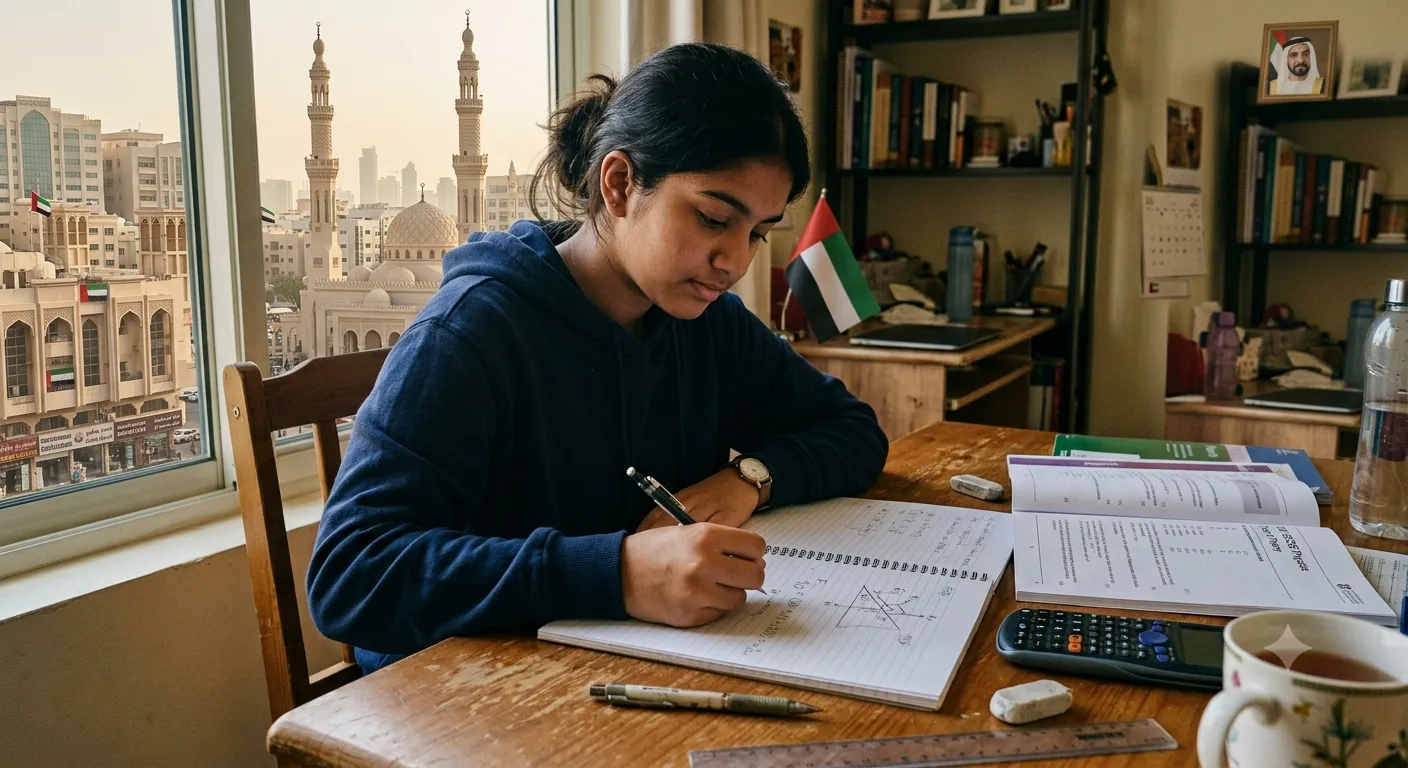
A Year 10 student stayed behind after class last term holding a mechanics worksheet. He had solved nine questions correctly. One near the bottom had been crossed out three times.
"Sir, I know the formula. I just don't know how it fits in this question."
After more than a decade teaching physics, I hear a version of that sentence every term. The maths was not the problem; he could rearrange equations and solve numerical problems. The gap was the moment between reading the question and writing the first equation, and that is where most IGCSE Physics marks are lost. The fix is not more hours. It is a different habit.
Why Formula Memorisation Stops Working Around Year 10
Earlier in school, physics rewards substitution. Numbers go in, an answer comes out. By IGCSE, the same equations start rewarding reading. Most students do not adjust to this shift.
Year 7 to Year 9 problems hand you the values cleanly. Year 10 problems do not. Mechanics questions get longer, diagrams appear, and two or three ideas combine inside one question.
Three equations show this pattern most clearly:
- F = ma. Exam questions rarely hand you the net force. You usually have to calculate it by combining or resolving other forces first.
- V = IR. Easy in a single-resistor circuit. Difficult once series and parallel combinations appear in one question.
- Power = Work ÷ Time. Direct on its own. Hard when the question does not tell you which energy type is being transferred.
In a forces mock, six students applied F = ma cleanly but forgot that friction was acting in the opposite direction. The arithmetic was perfect. The physics was wrong. Average loss across one question: 4 marks.
Equations describe what is happening. Interpretation is what makes them usable.
A Worked Example: The Box on a Rough Floor
Picture a box being pushed across a rough floor. The pushing force is 20 N to the right. Friction is 5 N to the left. Most students write F = ma immediately and stop. They think the force is 20 N. It is not.
The first thing I draw on the board is the force diagram.
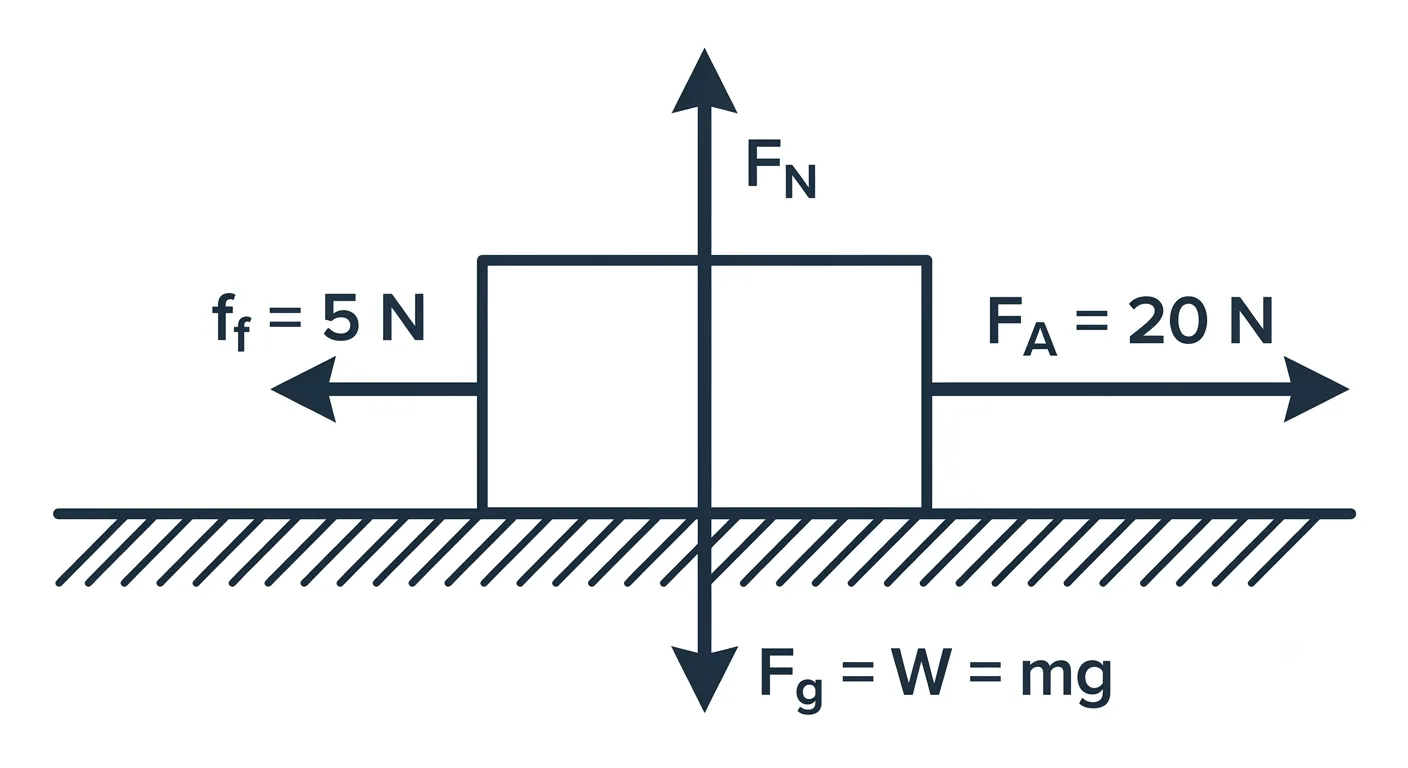
The free body diagram shows the net force is 15 N, not 20 N. Once those four arrows are on the page, the answer is in front of them. A physics solution follows four short steps:
Step 1:Read the situation.
Step 2:Draw the free body diagram.
Step 3:Work out the net force.
Step 4:Apply F = ma.
Most lost marks come from skipping Step 2.
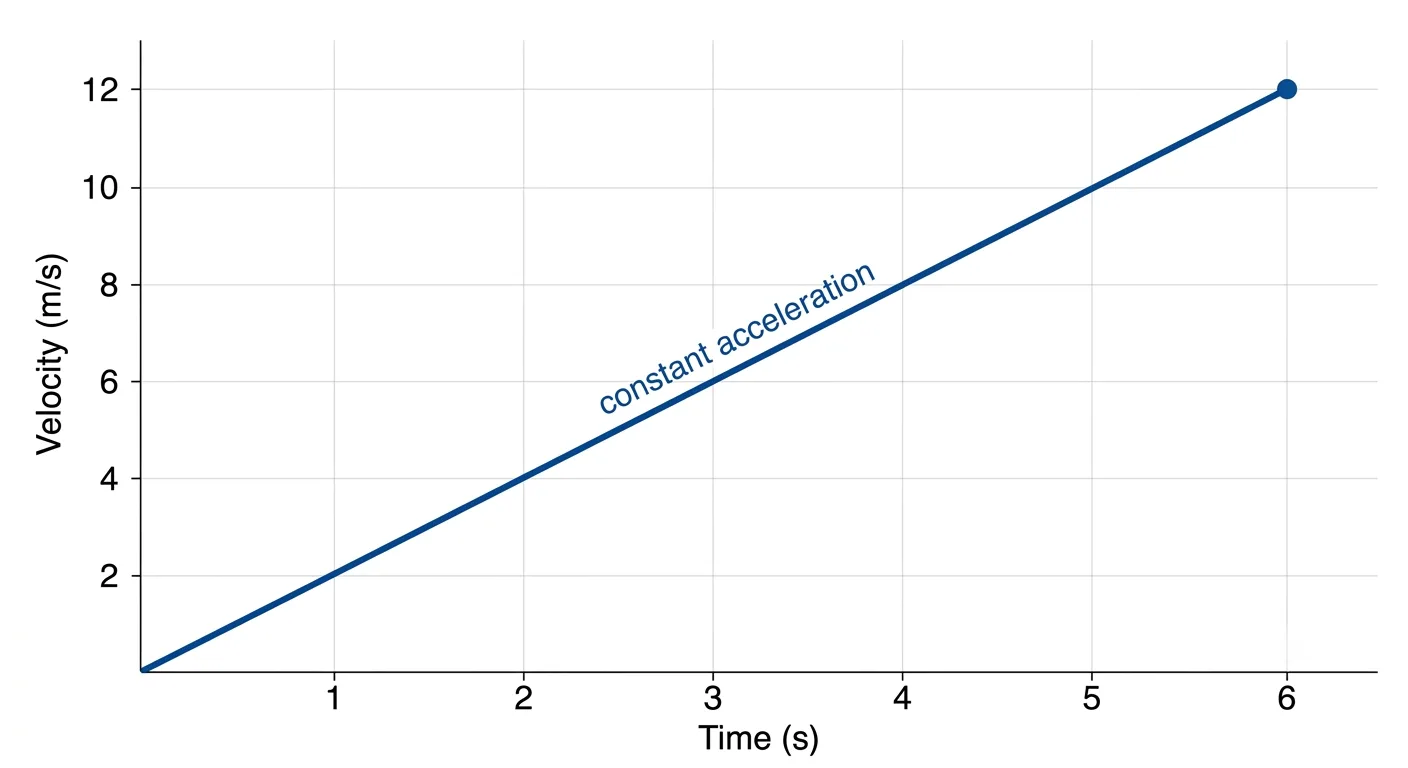
Motion graphs work the same way. A velocity-time graph rising in a straight line is already telling the story before any calculation begins.
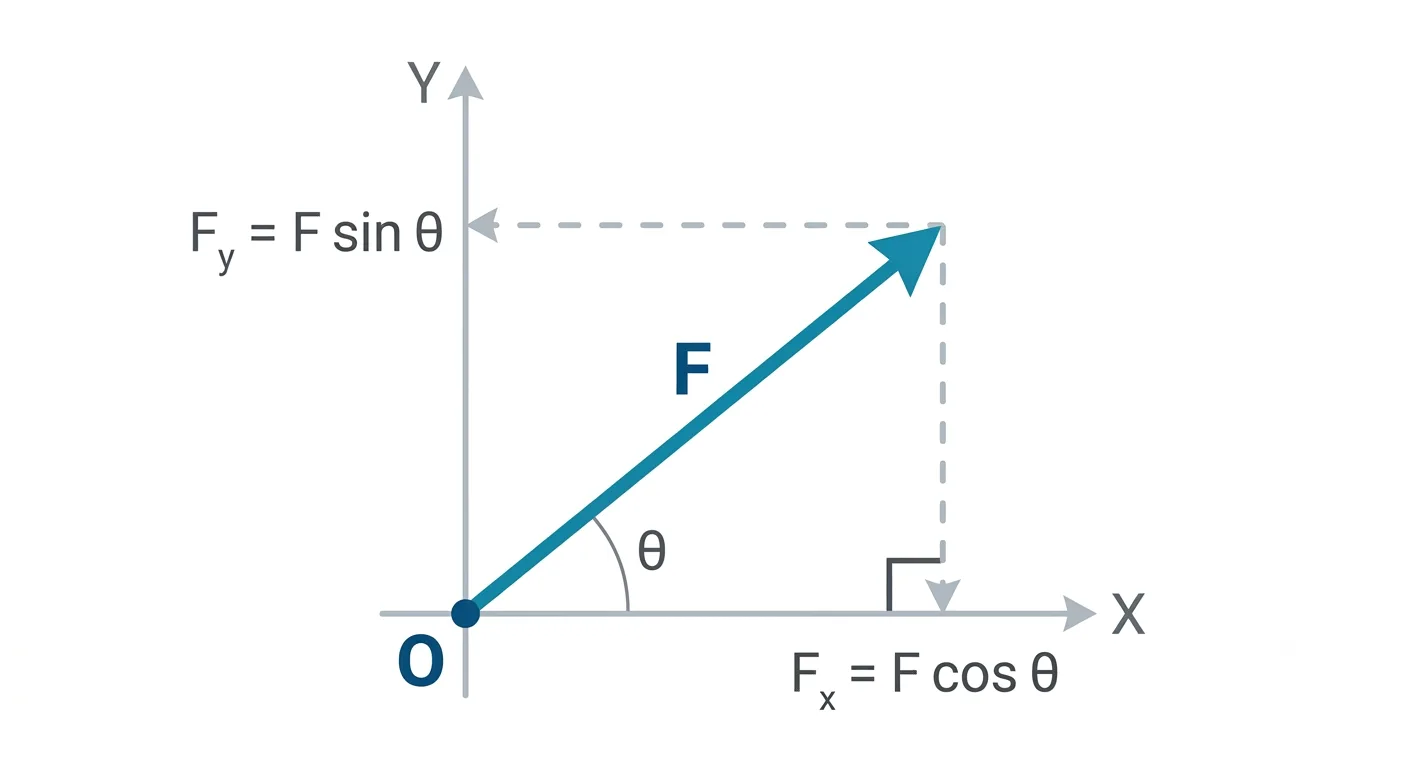
Vectors are where things get harder. A diagonal force is the first place many students lose confidence, because they have always thought in straight lines. The fix is to split the diagonal into one horizontal arrow and one vertical arrow. Analyse each direction separately. The question becomes two smaller questions, both solvable.
The First Thirty Seconds of a Question
The clearest difference between confident and struggling physics students appears in the first thirty seconds.
Weak students start writing equations immediately. They are worried about time. Strong students sketch the situation first. They draw arrows, label distances, mark angles. Once the picture is on the page, the question is usually half-solved.
The sketch does not need to be neat. Two arrows is enough. The point is to translate words into a physical picture before you calculate.
A student kept getting pulley problems wrong on homework. In one class, she drew the two tension arrows correctly for the first time and solved the question without help. The next paper, she repeated the same approach on three pulley questions and scored full marks on each.
A clear diagram removes half the confusion before the maths starts.
Reading the Wording: Hidden Physics Cues
Half of physics exam technique is reading the question properly. Students miss clues because they treat physics questions like maths exercises, when the wording usually carries the physics.
A quick translation guide for the most common cues:
- "dropped" means initial velocity is zero
- "comes to rest" means final velocity is zero
- "constant speed" means acceleration is zero and forces are balanced
A student kept choosing the wrong SUVAT equation. He could recite all five. He just ignored the phrase "comes to rest" at the end of each question. Once he started underlining trigger phrases before writing, his next paper jumped one full grade.
Once students start reading questions this way, theory sections feel less random. The wording is doing half the work for them.
For Abu Dhabi families looking for one-to-one support with habits like question reading and free body diagrams, Ustaad's physics tutoring in Abu Dhabi is built around the same approach used in this class.
Where Physics and Mathematics Meet
Some students enjoy maths but dislike physics because it feels disorganised. It is not. Physics is mathematics with a body attached.
In maths, a graph is a graph. In physics, the same graph can describe acceleration, energy transfer, momentum, or current change. The mathematics stays the same; the reading changes. A simple example: in maths, the gradient of a line tells you the rate of change. In physics, the gradient of a velocity-time graph is the acceleration of the object.
For students struggling with the maths side of physics, our companion piece on IGCSE maths revision explains how the same reading gap shows up in algebra and fractions. When the problem is rooted in maths foundations rather than physics intuition, Ustaad's maths tutoring in Abu Dhabi can address it directly.
Theory Questions and What They Reveal
Theory questions catch out students who relied on procedure. Calculation questions can be passed by following steps; theory questions cannot. I once asked a class why two forces acting in the same direction give the largest resultant. Half the room reached for their notes. The students who got it right pictured two people pushing a stalled car together, and the explanation became obvious because the image made sense first.
This is why I push every class to explain physics aloud before they touch the calculator. Some students who freeze here are not short on knowledge. They are carrying exam pressure that started earlier in the term, a pattern explored further in What UAE Parents Miss About Exam Panic.
A Different Way to Revise IGCSE Physics
When parents ask me for physics revision tips for IGCSE, the answer surprises them. Students do not need more hours with the textbook. They need different habits.
- Stop studying chapter by chapter. Revise by situation. Motion, energy and Newton's second law overlap inside one question. Students who revise by situation expect the overlap. Students who revise chapter-by-chapter panic when it arrives.
- Read the mark scheme, not just the answer. In Cambridge 0625 Paper 4 mark schemes, marks are awarded for the free body diagram itself, separately from the calculation. Students who skip the diagram lose those marks even when the final number is right.
Year 10 is where students decide whether to develop patience or rely on shortcuts. The ones who do well in IGCSE Physics are rarely the fastest. They are the ones who spend the first minute reading, sketching and thinking before writing. By mock season, that habit is their biggest advantage.
No commitment. Cancel anytime.
Frequently Asked Questions
Ustaad Subject Specialists
A group of practising Maths, Science, and English teachers who add worked examples, exam tips, and fact checks to our articles. Many teach in UAE schools and prefer not to use their names in public, so we share their subjects and experience instead. Every contribution is reviewed by Nida Iqbal before publication.
Nida Iqbal | MPhil in Education Leadership and Management
Nida Iqbal reviewed this article for educational accuracy and parent relevance, ensuring the IGCSE Physics teaching examples and revision guidance reflect sound classroom practice for UAE families.
Ustaad supports IGCSE Physics students across the UAE through diagnostic, concept-led learning aligned to Cambridge IGCSE Physics (0625) and Edexcel IGCSE Physics (4PH1).
No commitment. Cancel anytime.
 Ask on WhatsApp
Meet the writers behind Ustaad UAE on our editorial page.