
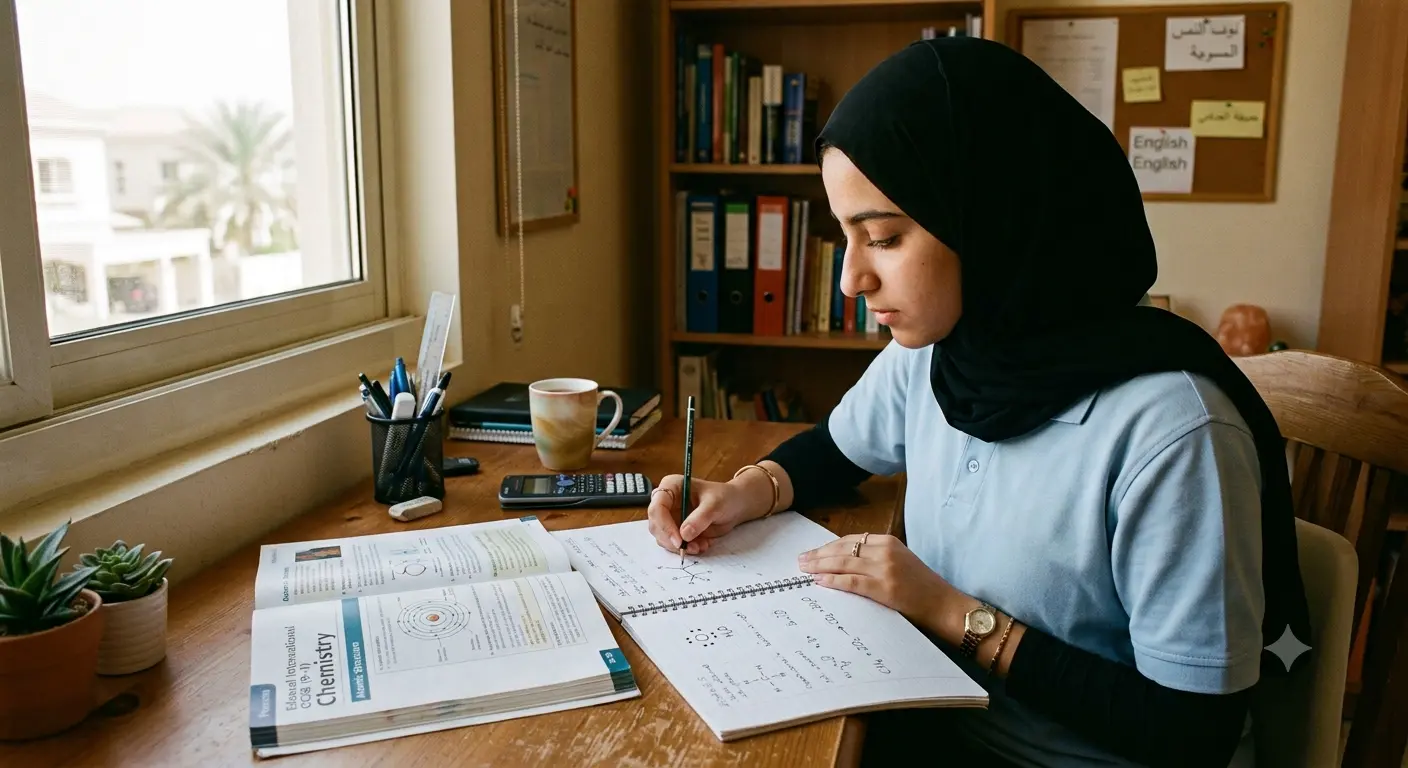
In the first Chemistry lecture of the year, I ask my students to draw the ionic bond in sodium chloride on a plain sheet of paper. Twenty-eight sheets come back. On six of them, the diagram is correct. On the rest, the electrons sit in the wrong place, or the sodium keeps its outer electron, or the two atoms are drawn side by side with no transfer between them at all.
Every student in that room studied ionic bonding at IGCSE or A-Level. Every one scored well enough on their board exams to be sitting in front of me. Between exam and lecture, something faded.
In ten years of teaching Chemistry at every stage, from Year 10 to third-year undergraduate, I have seen this pattern again and again. Most of what parents call “forgetting” is Chemistry that was never fully understood. The reasons are clear, and the fixes are practical.
1. Chemistry Piles On More New Ideas Than Memory Can Hold
Chemistry throws an unusual number of new ideas at students in a very short time. In a single term, a Year 10 student meets ionic compounds, covalent bonds, valency, isotopes, half-equations, oxidation numbers, catalysts, equilibrium and mole calculations. Each has its own definition, its own diagram, its own symbol.
Many of these symbols look arbitrary at first. A student meeting Chemistry for the first time has to hold hundreds of these connections in mind at once. When there is too much to store cleanly, some of it gets stored as isolated facts, and isolated facts fade fast.
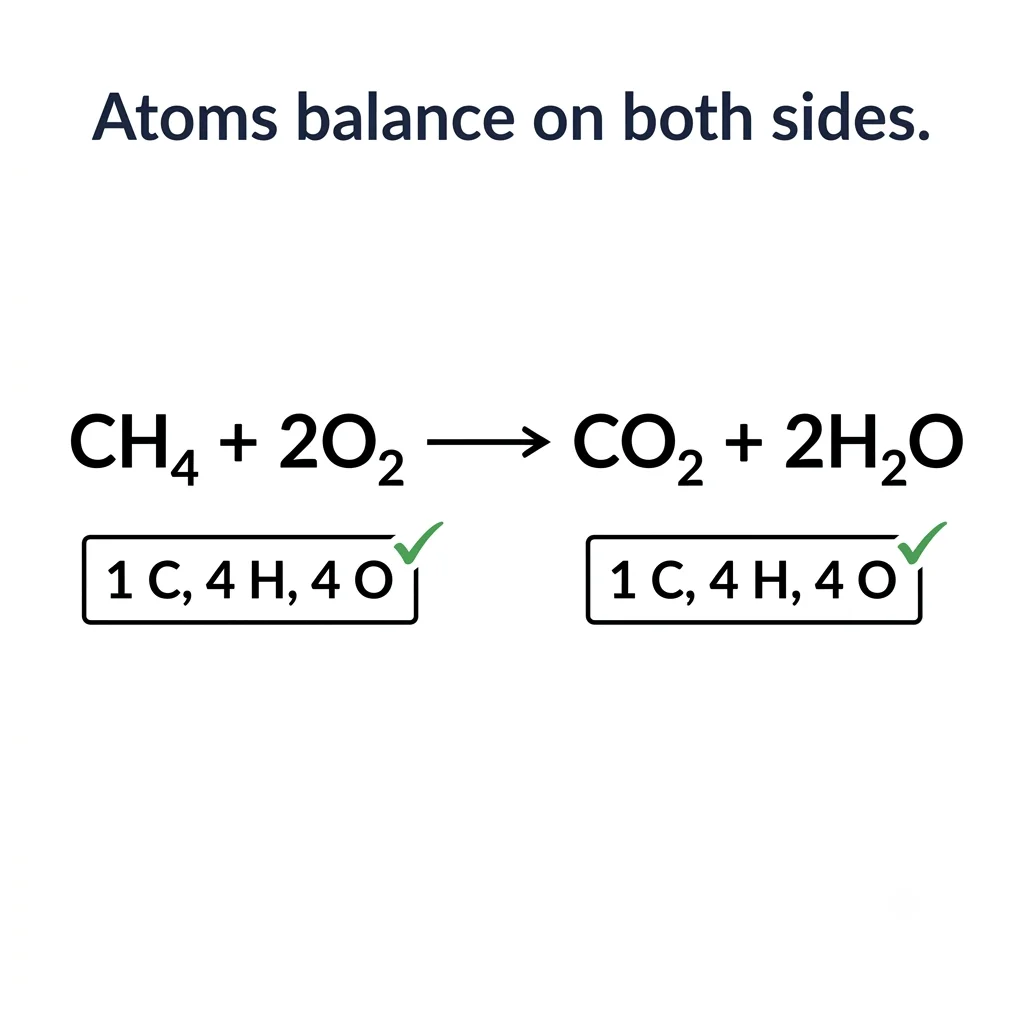
Last term one of my Year 11 IGCSE Chemistry students in Abu Dhabi (Cambridge 0620) could balance the combustion of methane, CH4 + 2O2 → CO2 + 2H2O, the day before her test. Three weeks later, shown C3H8 + O2 → ? in a mixed paper, she could not fill in the coefficients. She had memorised the shape of the first equation but had never learned to count carbons, hydrogens and oxygens on both sides. The picture faded. The method, if she had built it, would have stayed.
2. Why Reading Notes Alone Never Sticks in Chemistry
Many parents assume that if their child understood a topic in class, they will remember it. In Chemistry, that is rarely how it works.
There are two very different kinds of Chemistry knowledge. The first is being able to recognise a correct equation, structure or definition when you see it. The second is being able to produce it from scratch on an empty page. Homework and study guides usually train the first. Chemistry papers demand the second.
Cambridge IGCSE Chemistry (0620), Edexcel IGCSE Chemistry (4CH1) and A-Level papers all expect students to produce answers. Draw the structural formula of propan-1-ol. Write the balanced equation for ethene reacting with bromine. Explain why glucose is soluble in water. A student who has only re-read notes feels the answer is somewhere in her head but cannot write it down. Chemistry rewards writing and drawing, not reading alone.
Parents seeing a similar understanding-versus-performance gap in Physics may recognise our companion article Why Physics Understanding Does Not Mean High Marks | Ustaad which explores the same distinction from a psychology angle.
3. Why Cramming Chemistry Rarely Works
The most common revision pattern I see in struggling students is cramming: the day before a test, moving through every topic in one long session.
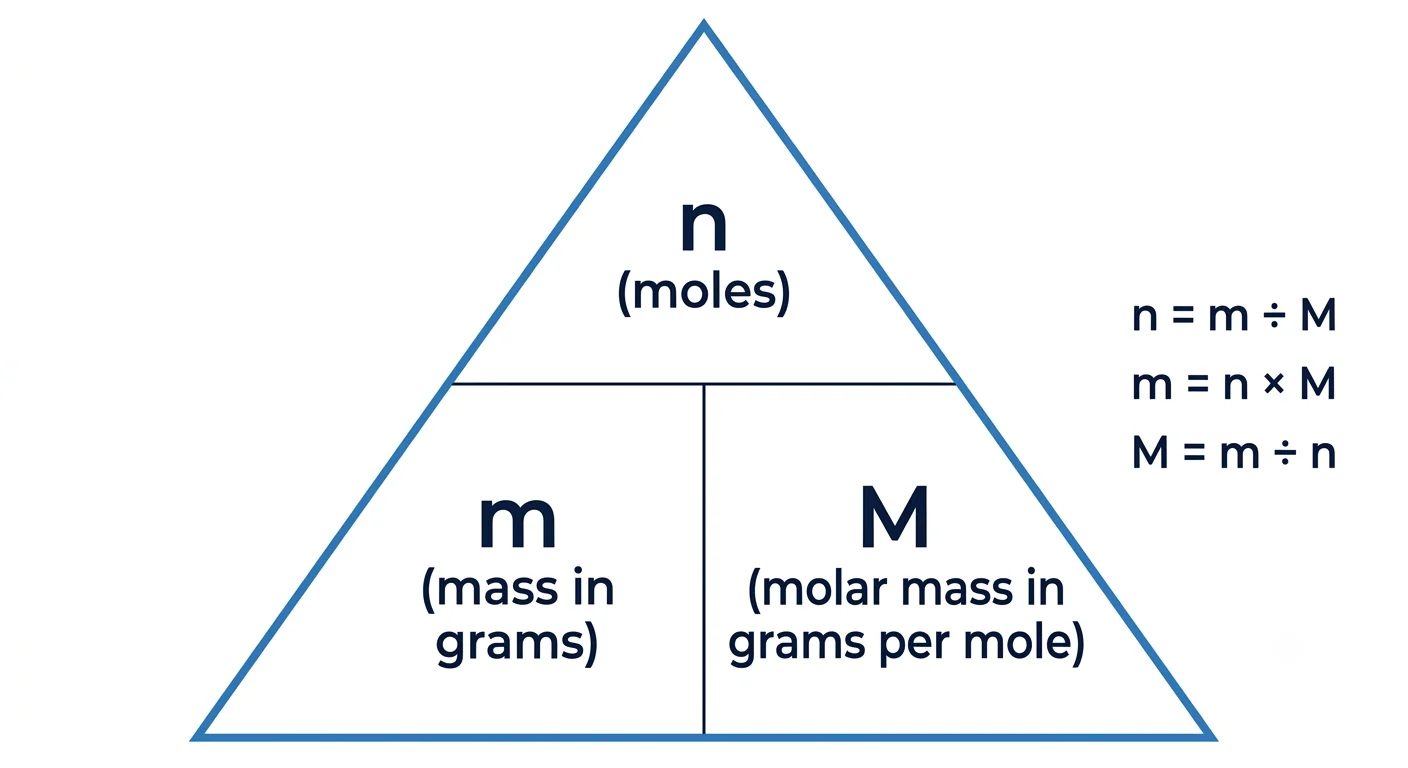
Cramming works for a few days and then falls apart. Because Chemistry topics build on each other, this is especially damaging. A student who crams the mole formula n = m/M the night before a test can rearrange it and get full marks the next morning. Six weeks later, in a titration question, she has to combine n = m/M with n = cV and a mole ratio at the same time. Because she rushed the first formula, it does not come back cleanly when the situation grows more complex.
The alternative is spaced revision. The student revisits the same topic in short bursts across days and weeks: the same day, then three days later, then a week later. Each return strengthens memory.
A family I worked with in Sharjah had a Year 10 IGCSE Chemistry student (Edexcel 4CH1) who moved from a C to a B in one term after her parents swapped weekend cramming for twenty focused minutes each evening. Same total time, very different outcome.
4. Draw It, Don’t Read It: The Power of Visual Chemistry
Chemistry is a deeply visual subject, but most students revise it as text. They read paragraphs about bonding and memorise definitions of ionic and covalent. They rarely draw the structures themselves.
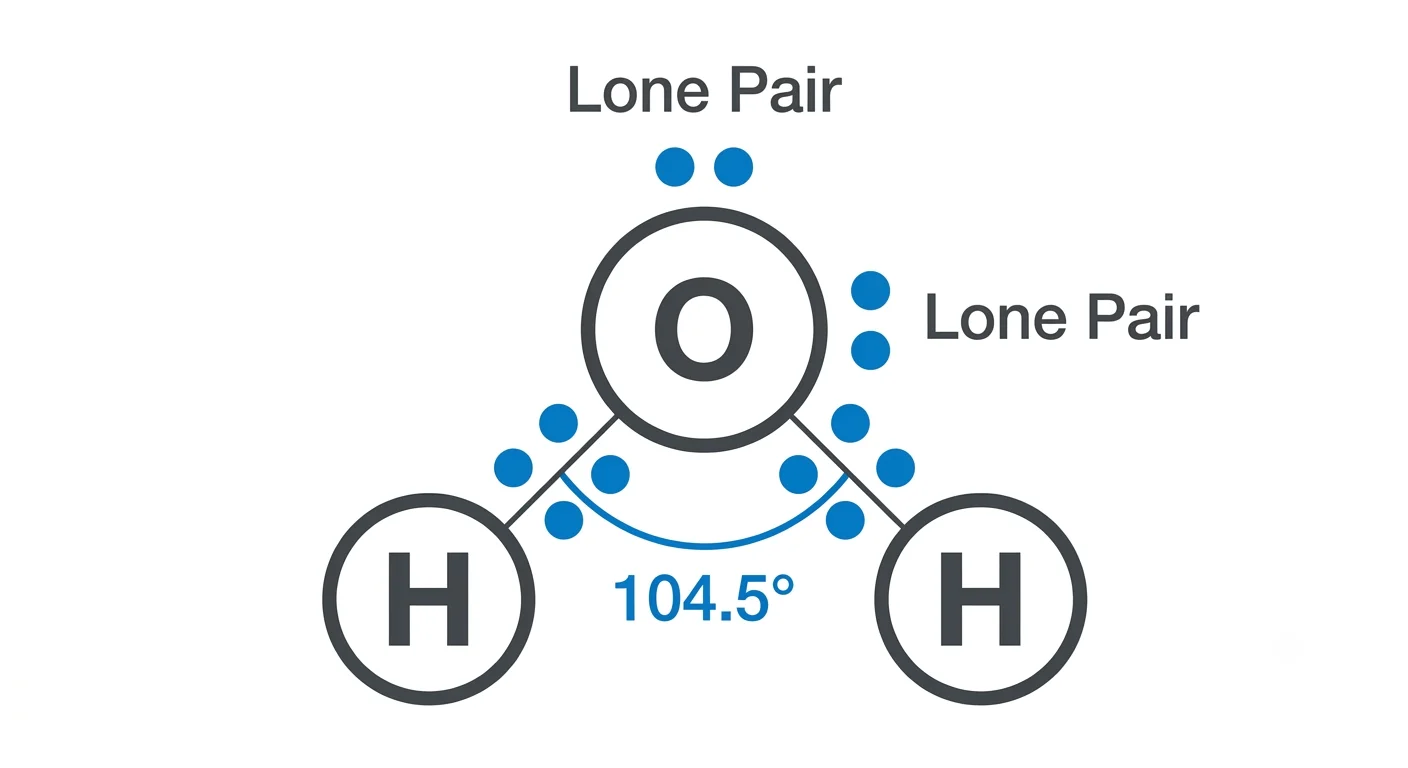
That is a mistake, because Chemistry is built to be seen. Take the water molecule. A student who reads that water is bent will forget it. A student who draws the Lewis structure themselves, an oxygen atom with two dot pairs on top, two hydrogens branching down at 104.5 degrees, remembers it. From that one hand-drawn picture, she can also explain why water dissolves salts, why ice floats, and why water forms hydrogen bonds. Three chapters of Chemistry, unlocked from one drawing.
The same is true elsewhere. The periodic table becomes memorable when the student colour-codes groups. Organic chemistry becomes memorable when the student draws each reaction mechanism arrow by arrow. Mole calculations become clearer when the student sketches the ratios rather than treating them as numbers on paper.
I ask every new class to keep a plain notebook for quick sketches. Not neat diagrams for display, just rough drawings for thinking. The students who commit to this habit almost always say the same thing during mock season: the topics they drew, they remembered.
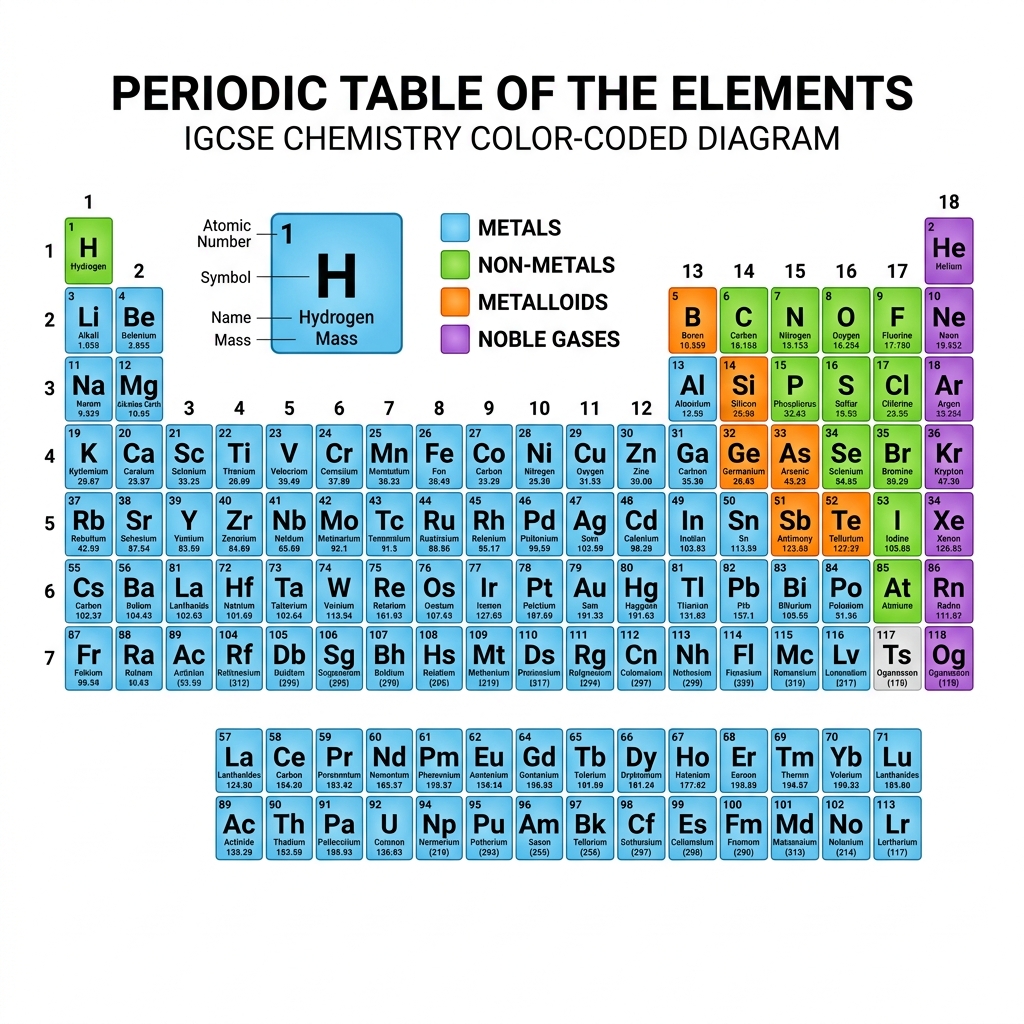
5. The Periodic Table: The Map That Ties Chemistry Together
The periodic table is not just a poster on the classroom wall. It is the single most powerful memory tool in Chemistry.
Most students see 118 boxes and try to memorise them one at a time. That approach fails within weeks. Dmitri Mendeleev arranged the elements in 1869 for a reason. Every column (a group) contains elements that behave similarly because they have the same number of outer electrons. Every row (a period) shows how properties shift as electrons fill up.
Once a student sees the logic, memory becomes automatic. Group 1 elements, lithium, sodium and potassium, all react violently with water because each has one outer electron ready to donate. Group 7 elements, fluorine, chlorine and bromine, all form salts because each needs one electron. Noble gases in Group 0 do not react because their outer shells are already full. A student who understands this can predict a reaction she has never seen, just by reading the table.
A Year 10 IGCSE Chemistry student in Dubai (Cambridge 0620) once told me she was trying to memorise every element on the table. After one lesson tracing group patterns, she stopped memorising and started reading the table like a map. Her next mock moved from C to B on periodic questions alone.
For a companion perspective on how the same connective approach helps in another subject, our article Hours of Revision, Still Low Marks explains where students most often lose marks in maths for similar reasons.
6. Chemistry Hacks That Actually Work at Home
Here are the practical habits I ask every one of my students to build. None take long. All of them work.
The periodic table hack. Do not memorise the whole table at once. Learn one group per day: Group 1 on Monday (lithium, sodium, potassium, one outer electron, all react violently with water), Group 2 on Tuesday, and so on. By the end of the week the pattern has done the memorising for them.
The bonding hack. Any time a bond appears, ask your child to draw the dots and crosses. Sodium giving one electron to chlorine to form Na+ and Cl-. Two hydrogens sharing electrons with oxygen to make water. The picture holds long after the definitions fade.
The equation-balancing hack. For any equation, count atoms on both sides before writing any coefficients. Carbon first, hydrogen next, oxygen last. Students balance equations faster within a week of applying this order.
The “why did this happen?” habit. After every reaction your child studies, ask one sentence: why? If they can say “because chlorine wants an extra electron and sodium wants to lose one,” the reaction sticks. If they can only say “because the textbook said so,” it fades.
The mole triangle. For every mole problem, ask your child to write n = m/M as a triangle, with n on top and m ÷ M underneath. The triangle removes the need to memorise how to rearrange the formula.
If a student consistently struggles despite these habits, a qualified Chemistry teacher can identify exactly where the memory is falling apart. Ustaad’s Chemistry tutoring in Abu Dhabi is built around this retention-first approach, not around adding more hours of textbook time.
No commitment. Cancel anytime.
Frequently Asked Questions
Saira S. | Content Writer & Exam Specialist
Saira is an experienced writer focusing on study habits and exam strategies for Science subjects. Her work helps students understand how to retain complex information over time and turn short-term revision into lasting exam performance.
Nida Iqbal | MPhil in Education Leadership and Management
Nida Iqbal reviewed this article for educational accuracy and parent accessibility, ensuring the guidance reflects sound classroom practice for UAE families.
Ready for Chemistry that actually stays in memory?
Sometimes the challenge is not how much a student studies, but how the memory is being built. Working with an experienced Chemistry teacher can help students strengthen understanding, revise more effectively and hold on to what they learn across the year.
No commitment. Cancel anytime.
 Ask on WhatsApp